


Musician Claire Rosinkranz on her instant stardom talks about new her upcoming work
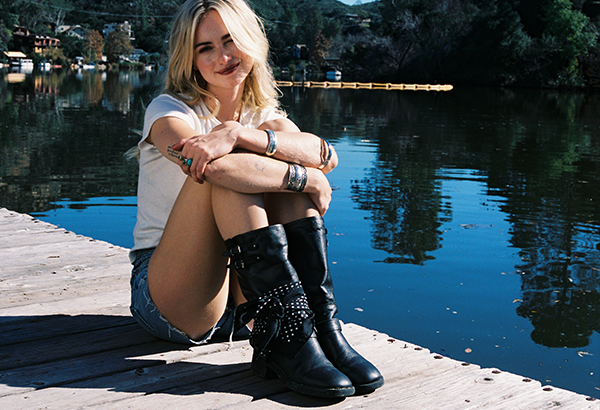
When I met Claire Rosinkranz downtown, she was strikingly tall, blonde, and holding a take-out container of pancakes. She smiled and hugged me but didn’t take her large sunglasses off. Her disposition read as sweet and extremely West Coast. She apologized about the pancakes—she was coming from another interview and hadn’t had time to eat yet.
Rosinkranz, now twenty-two, initially rose to fame when she was sixteen, during the pandemic. If you ever used TikTok during that time, you know her song “Backyard Boy,” which now has over 300 million streams on Spotify. The opening lyrics “dance with me in my backyard…” bring to mind hundreds of videos from that era. It was the first song Rosinkranz ever put out, and it went instantly viral.
I asked Rosinkranz if the overnight success shocked her. But she said confidently that no, it didn’t. She always knew she was going to be a musician. She told me, “I just felt it so strongly in my gut…I’ve always been that way, that’s the way I make a lot of my music. That’s the way I make a lot of my decisions.”
After her first hit, Rosinkranz’s career took off. She was touring, pumping out new music. She was pushing herself—hard—working constantly. She had gotten so much success so quickly and wanted to keep it up.
But then, everything suddenly slowed to a halt. Rosinkranz got sick with a totalizing illness that consumed her life. She said, “I was passing out left and right. I, in full honesty, was deathly ill.” She described fainting every time she tried to lift her head up.
The experience shocked her at first. “You just think that you’re invincible at this age.” She had to rely on her parents heavily during that time. Her illness forced her to pause her music and her work—not something she was accustomed to.
But now, when Rosinkranz talked about this time in her life, she almost sounded grateful to have gone through it. It gave her time to self-reflect, totally transforming her relationship to work and creating. Now she believes, “resting is one of the most productive things that you can do, because without that, you can’t self-reflect.”
“In a garden when the plants die, they go back into the ground and become food for the next life ahead. Both life and death can exist in the same place and still be beautiful.”
Rosinkranz doesn’t think her new album My Lover would have been possible without that period of self-reflection. When listening to the album, her introspection feels tangible. She doesn’t sound like a teenager anymore, but an artist who has come into her own. Though still clearly pop music, the record feels more mature.
Taking inspiration from her illness and her period of rest, she said, while creating this album, she was thinking a lot about the cycles of life, the highs and lows.
While she was writing, she spent a long time meditating on the image of a garden. “In a garden when the plants die, they go back into the ground and become food for the next life ahead. Both life and death can exist in the same place and still be beautiful.” Now, Rosinkranz said, when something ends, she tries to think about how the ending also brought new life.
The cover of the album shows Rosinkranz riding a white horse, in a quick blur of motion. As the horse races forward, Rosinkranz’s head is turned over her shoulder, looking back. When she picked this image, she was thinking about these same things, about the dichotomies and cycles of life.
She said she “likes horses because they’re sensitive, intuitive, delicate, pretty, and feminine. But at the same time, they have a lot of authority, a lot of strength. That’s such a beautiful contrast in tension, and that’s how I am as a person.”
This contrast comes across in the sound of the album too. As Rosinkranz described, there are not only the loud pop songs but also the vulnerable and sensitive songs. One of the most vulnerable songs on the album is “Chronic,” which describes her experience with her illness.
Rosinkranz’s new outlook has shaped every aspect of her musical career, including her relationship to playing live shows. She said, “While I’m touring, I usually always get sick.” But during her most recent tour, it was different. She didn’t get sick at all. She was prioritizing sleep and rest, taking care of herself. “The shows were awesome,” she told me. “I was in my element, and it was just fun, honestly.”
Partway through the interview, she paused to take a few bites of her pancakes, telling me she needed to eat. It was a totally graceful, natural pause, and a moment where her new outlook was visible. No matter what, you have to stop and take care of yourself.
Photograph of Claire Rosinkranz by Sabra Binder.