


As Sarabande Foundation opens its new Tottenham home, the organisation continues Lee Alexander McQueen’s legacy of giving emerging creatives something London is increasingly short of: space.
London doesn’t make it easy to be a young artist anymore. Studio rents climb faster than day rates, degree shows end and the doors close behind them, and the city’s creative infrastructure, shared workshops and accidental introductions that turn into collaborations keeps shrinking.
Sarabande Foundation was built against exactly that pressure. Founded by Lee Alexander McQueen in 2006, the Foundation was created to give emerging creatives affordable studio space, mentorship and a community that doesn’t disappear the moment the degree show ends. Nearly two decades on, its purpose feels no less relevant.
This year, that work enters a new chapter. Sarabande has opened a new home in Tottenham, expanding its existing presence in Haggerston and creating space for more artists, disciplines and opportunities to come together.
“The need for inexpensive artists’ studios is higher than ever, and these have to be the most beautiful studios in London,” says Trino Verkade, Chief Executive of Sarabande Foundation.
Alongside studios and creative spaces, the new site includes the House of Bandits gallery and café, opening the Foundation further to its surrounding community.
“With our new gallery, residents do not have to travel into central London to experience cutting-edge art and culture,” Verkade explains. “With the gallery and cafe we are establishing ourselves as a bigger part of the local community.”
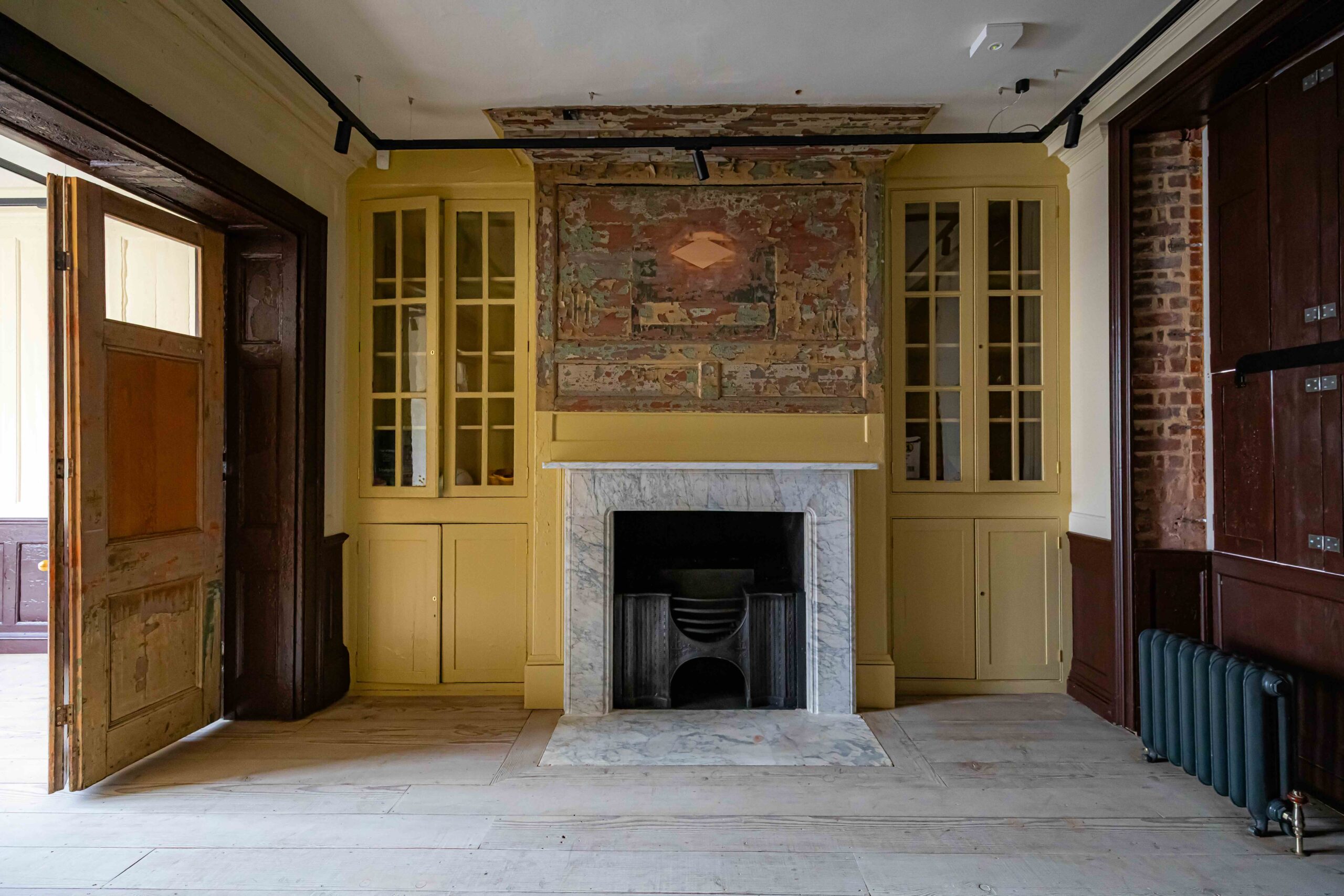
If London’s creative landscape increasingly feels defined by what has disappeared, Sarabande’s Tottenham home offers a glimpse of what can still be built. The Foundation has restored a historic building while retaining original timber doors, weathered surfaces and architectural details alongside contemporary studios, workshops and communal areas.
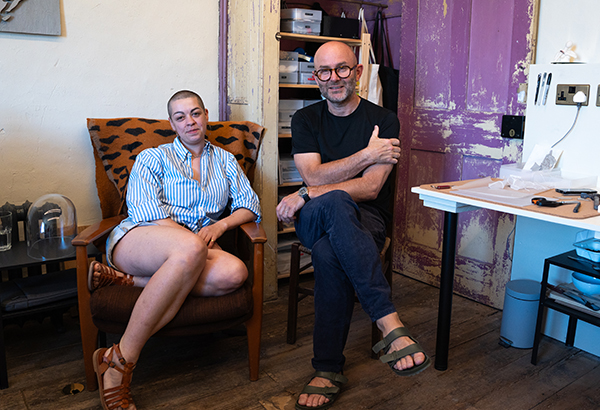
Across the site, different creative practices can exist alongside one another. The Tottenham residents include artists and makers working across fashion, sculpture, painting, photography, ceramics, jewellery, lace and taxidermy: Rizza Zahid, Ella Lynch, Sinead O’Dwyer, Torisheju Dumi, Jack Laver, John Spyrou, Amelia Cross, Bisila Noha, Tom Hallimond, George Wilkin, Jingyi Li, Phoebe Corker Marin, Kay Doble, Cha’ky Donnelly, Helena Palmieri and Phillip Pope. Together, their varied practices reflect Sarabande’s commitment to supporting creatives who work beyond conventional boundaries, placing different disciplines within the same creative ecosystem and allowing ideas to move between them.
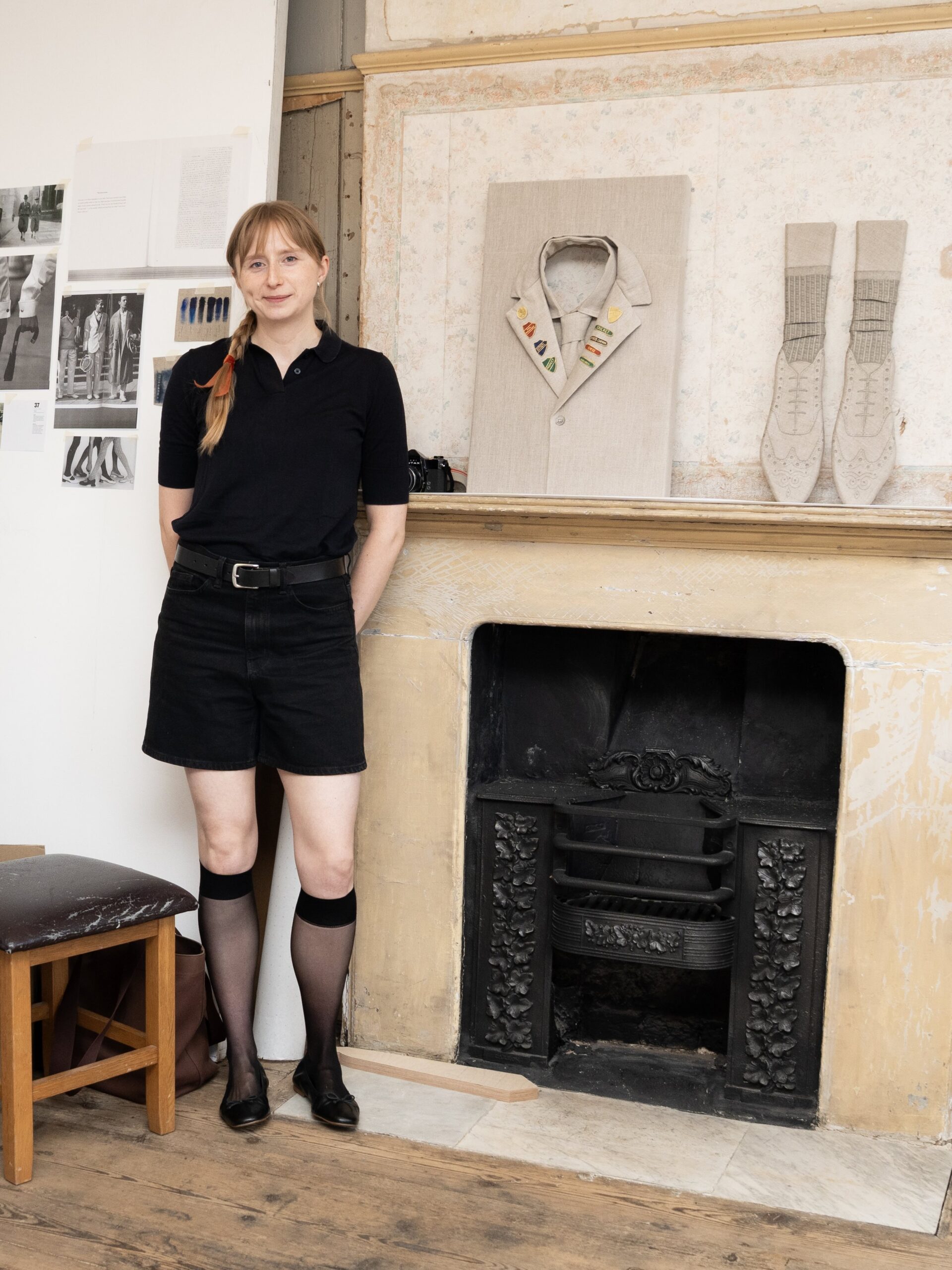
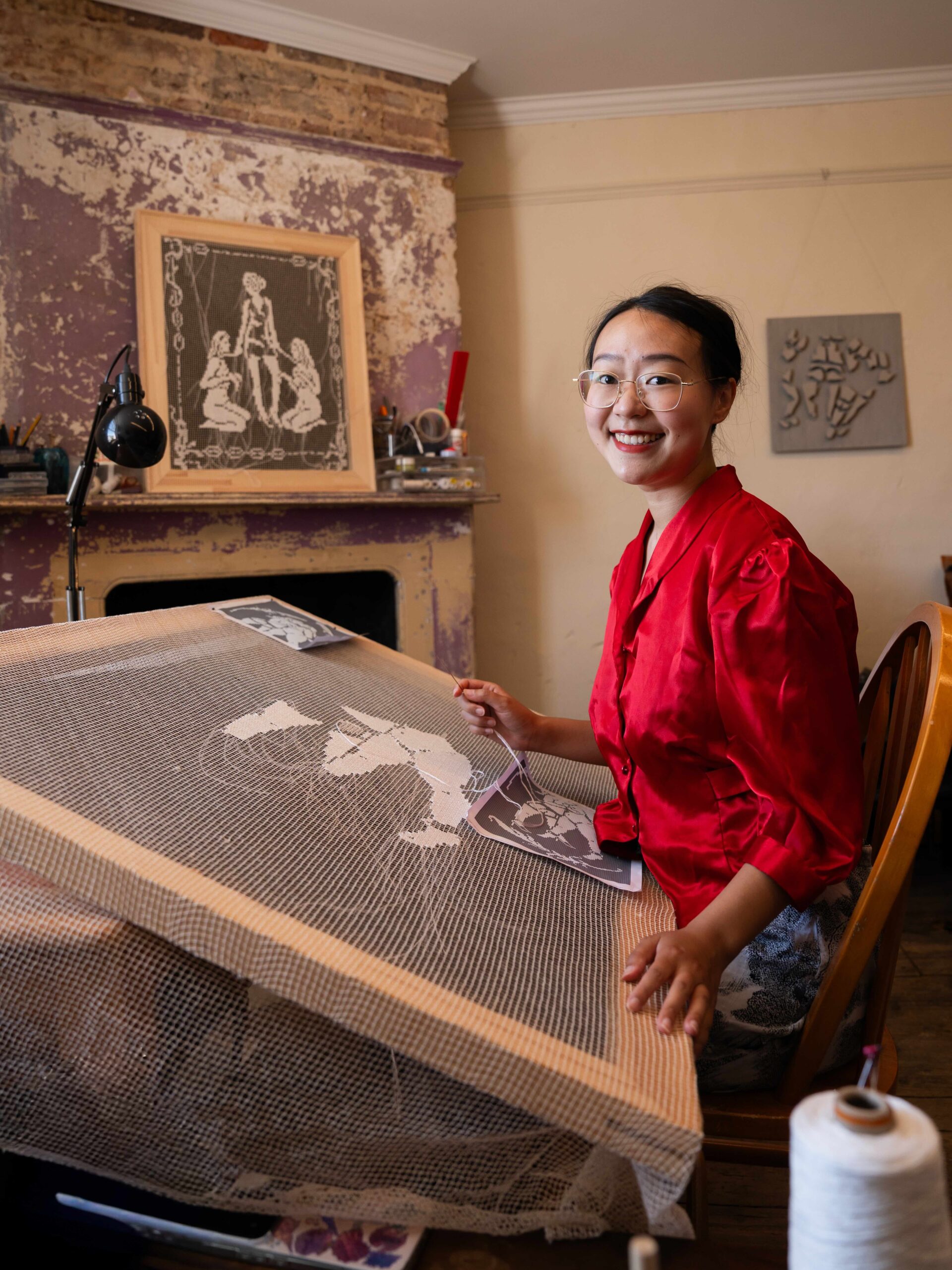
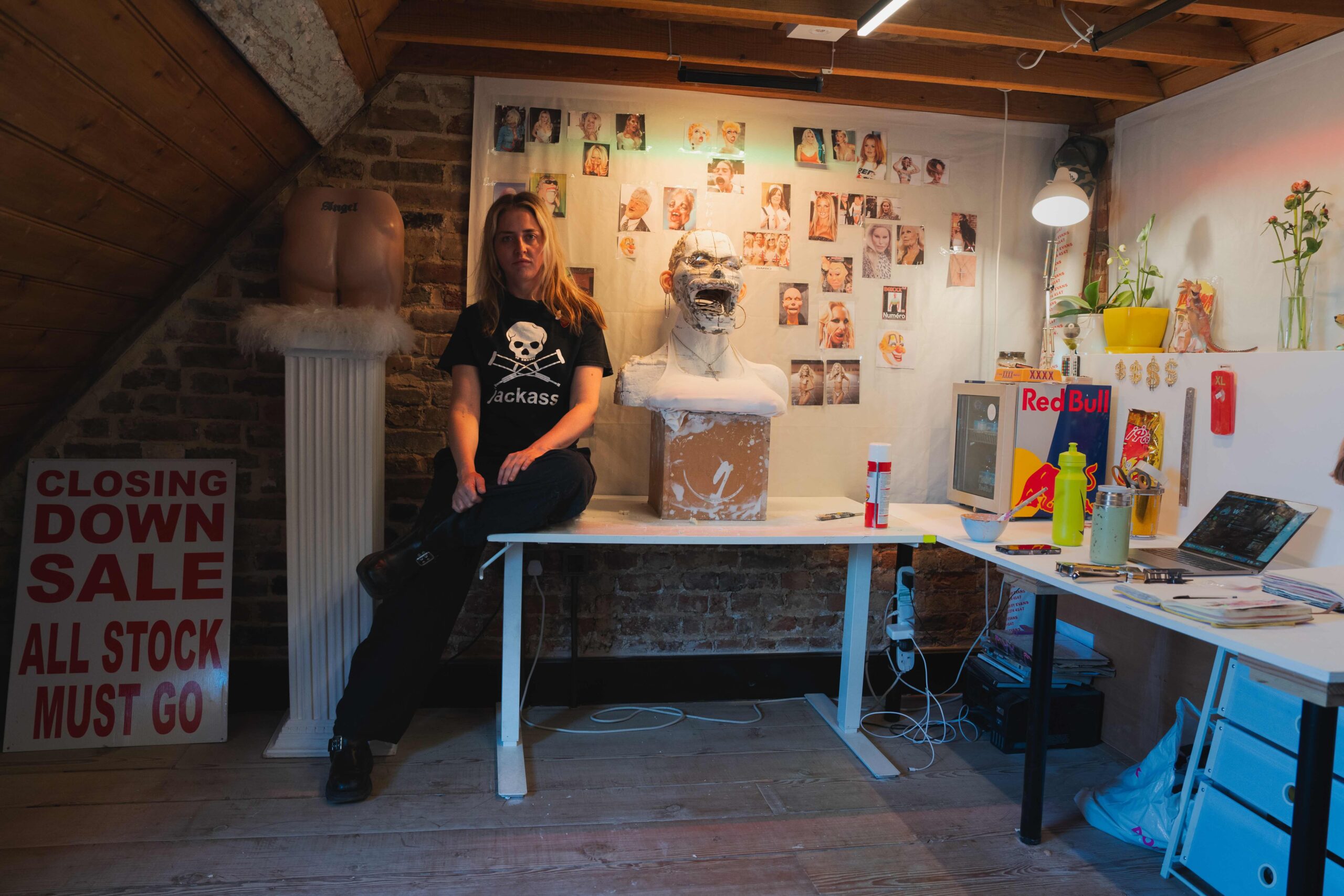
That diversity is currently visible in DESIRE, Sarabande’s summer group exhibition. Bringing together work from its resident community, the show moves between drawing, painting, sculpture and material-led practices, offering a snapshot of the different ways Sarabande’s artists approach their work. The exhibition makes visible what can happen when artists with very different practices are given room to develop alongside one another.
The new Tottenham home also gives Sarabande’s artists another route from studio to audience through House of Bandits, its non-profit gallery dedicated to work by current residents and alumni. Established in 2020, the gallery brings together art, fashion and jewelery, with purchases directly supporting the Foundation and its artists. It creates another part of the ecosystem: a place not only to make work, but to share it, sell it and allow a wider audience to take something of Sarabande’s creative community home with them.
“Meeting face to face is important to build connections that sustain the art.”
Trino Verkade, CEO Sarabande Foundation.
That proximity matters. A studio can provide somewhere to work, but space alone doesn’t necessarily create a creative community. What makes a place valuable are the conversations that happen around the work: the exchange over coffee, the chance encounter in a shared space, the collaboration that might not have happened otherwise.
“Part of our mission is to build peer-to-peer communities,” Verkade says. “We create spaces to come together to share ideas, opinions and woes, even if it’s while making a cup of tea in the kitchen!”
The Foundation also offers gallery spaces for artists to exhibit and lead workshops, alongside opportunities to collaborate, create monumental-scale work and sell collections. “Meeting face to face is important to build connections that sustain the art,” Verkade says.
The decision to establish the new space in Tottenham is also a response to the changing geography of London’s creative scene. Rising costs have made affordable studio space increasingly difficult to find, pushing artists towards newer areas of the city.
“Rising prices mean that artists are struggling to find cheap spaces to work,” Verkade says. “But it just means they take over newer spaces like Tottenham. That’s why Sarabande Foundation set up there; we follow where the artists go.” There is optimism within that perspective. “London is still thriving,” she adds. “Artists will always find a way!”
For Sarabande, following the artists also means supporting creatives whose practices don’t necessarily fit neatly into existing structures. “The foundation is home to those hugely talented creatives who often don’t fit elsewhere or fall between the cracks,” Verkade says. With residents working across different disciplines and ambitions, “there is no ‘one size fits all’ at Sarabande.”
Almost twenty years after McQueen founded the Foundation, his influence remains embedded in that approach. Asked what part of his vision continues to guide Sarabande today, Verkade’s answer is simple: “Taking risks and staying true to your vision.”
Perhaps that is what Sarabande’s move to Tottenham represents most clearly. Not an attempt to preserve London’s creative past, but an investment in its ability to keep producing something new.
Emerging artists don’t just need somewhere to put a desk. They need somewhere to experiment, collaborate, fail, meet people and discover what happens when their practice collides with somebody else’s. They need space — and for now, Sarabande is making sure they have it.
Homepage banner image, painter Cha’ky Donnelly. Homepage costume by Vic-toria Ruiz. Inside image artist Phoebe Corker Marin and photographer Sølve Sundsbø. images courtesy of Sarabande Foundation.