



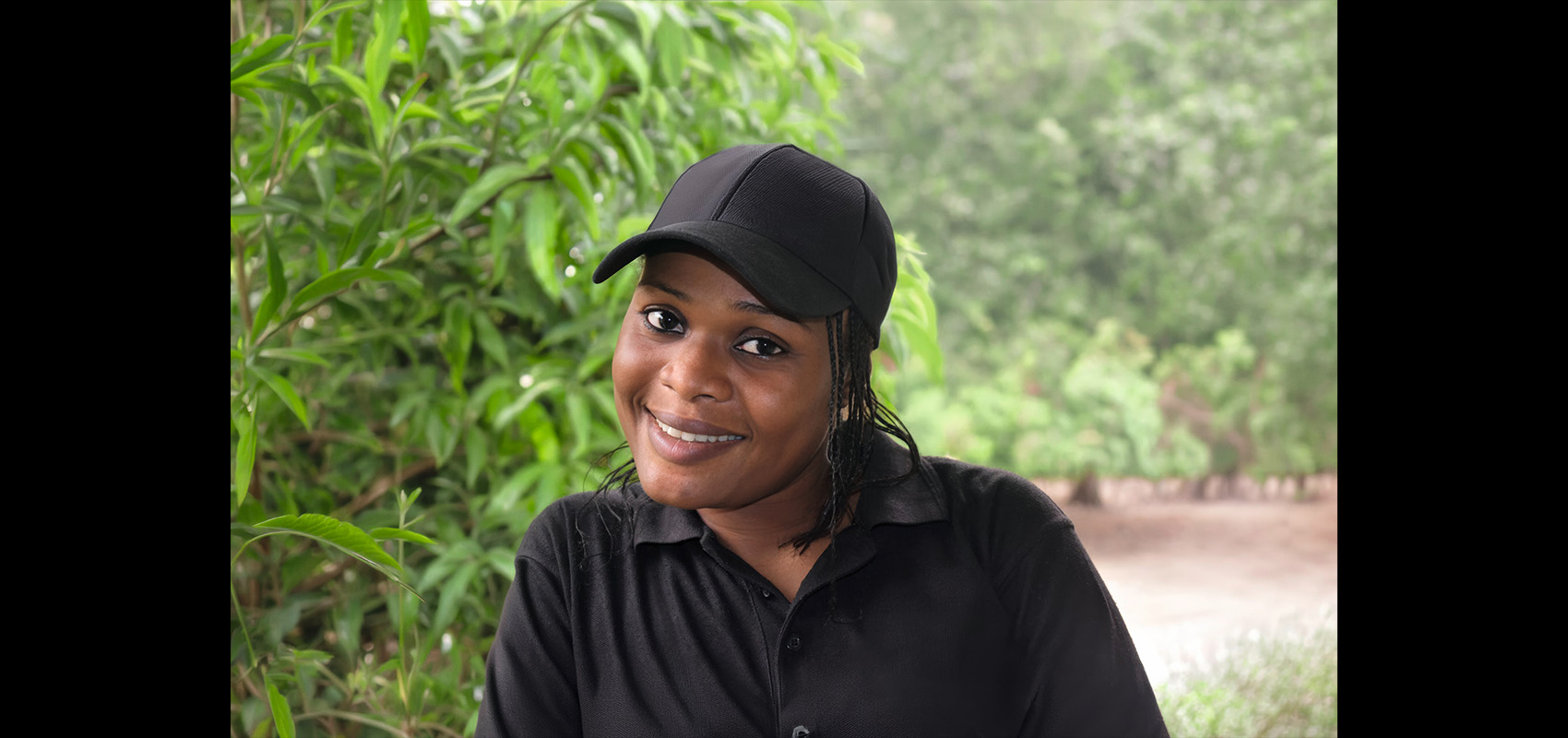
Rolex Laureate Rachel Ikemeh talks redefining conservation in Nigeria, and empowering the communities that live alongside them.
Rachel Ikemeh does not speak about conservation as an abstract idea. For the Nigerian biologist and Rolex Laureate, it is a daily, urgent practice rooted in the forests and communities of Southern Nigeria, places where biodiversity and human livelihood intertwine. Ikemeh’s work focuses on some of the most threatened forest habitats in the region.
At the center of Ikemeh’s efforts is the Niger Delta red colobus monkey, one of the world’s 25 most endangered primates. Once in danger of extinction, the species has been seen as rare but making a recovery thanks to Ikemeh’s persistence. Rather than relying on centrally driven conservation efforts, Ikemeh uses grassroots practices that place local communities at the heart of protection efforts. It is a strategy of combining collaboration, resilience, and compassion that has defined Ikmeh’s impact.
As the founder and director of the SW/Niger Delta Forest Project, Ikemeh has led the fight to protect over 5,800 hectares of forest and has safeguarded 13 endangered species. Her work extends beyond preservation and goes into restoration. This has included the creation and management of two protected areas in regions that have often been marked by instability as well as high security risks. While these environments are not the easiest to work in, Ikemeh has come up with a strong model that continues to gain traction in it. In part, the model recognizes that conservation cannot succeed without economic and social inclusion.
You can feel Ikemeh’s mission in the communities her work has already reached too. Across the Niger Delta, more than 2,500 people have seen their livelihoods improve through conservation linked initiatives, ranging from sustainable resource practices to education and training. For Ikemeh, protecting ecosystems isn’t separate from supporting people; it’s about making sure local communities are invested in, and benefit from, the future they are helping to preserve.
Her influence also reaches farther than Nigeria. As Co-Vice Chair of the IUCN Primate Specialist Group African Section and a member of the International Primatological Society’s education committee, Ikemeh is helping to shape a new generation of African conservation leaders. Ikemeh’s advocacy emphasizes the importance of local knowledge in addressing global environmental challenges.
The Rolex Award will enable Ikemeh to expand her work, including the development of a new training hub and mobile education program aimed at duplicating her success that exists across neighboring communities.
In a region defined by its oil industries, Ikemeh is quietly reshaping the narrative, proving that even the most endangered ecosystems can recover when there are communities that help to protect them.
Homepage image A colobus monkey, pictured in Nigeria’s Niger Delta. Rachel Ikemeh’s innovative approach to conservation involves and empowers Delta communities, successfully allowing her to protect over 5,839 hectares of forest and at least 13 threatened species, while improving the livelihoods of more than 2,500 people. Inside image Conservationist Rachel Ikemeh, Laureate of the 2026 Rolex Awards, in Nigeria’s Niger Delta. Credited with saving the Niger Delta red colobus monkey from the brink of extinction, Ikemeh inspires community-led conservation in the Delta. ©SW/Niger Delta Forest Project