



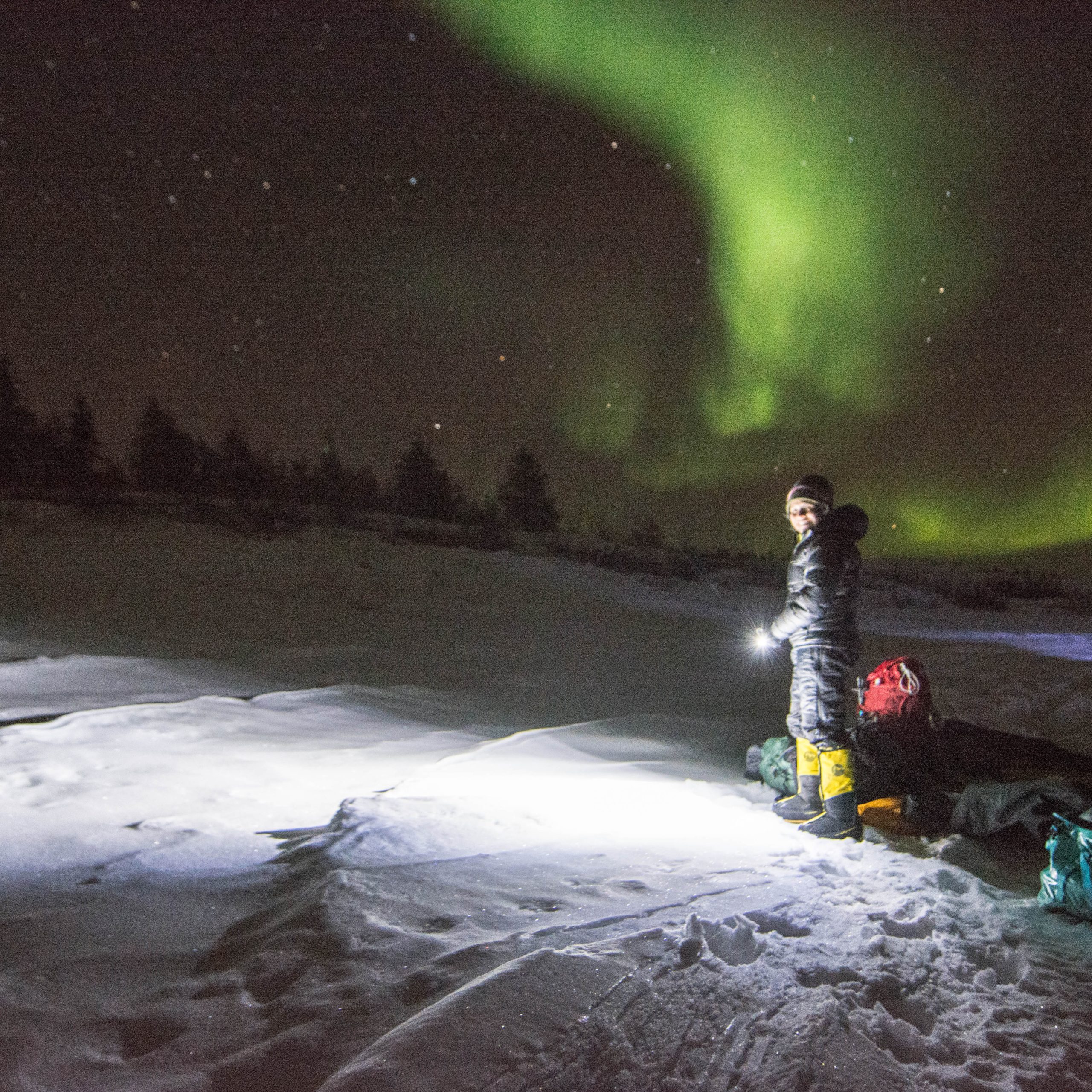
Silvia Vasquez Lavado opens up about tackling Everest, nature’s healing properties, and the creation of her non-profit Courageous Girls.
Mountaineer and activist Silvia Vasquez Lavado was the first-ever Peruvian woman to summit Everest and the first openly gay woman to complete the Seven Summits. The 47-year-old began her climbing journey at the age of 30 and reached the peak of Everest at 41. Lavado recently announced the release of her book and its screen adaptation starring Selena Gomez. Below, Lavado opens up about her journey towards sobriety, her hopes for the future, and how she plans to inspire young climbers through her non-profit against violence and abuse towards young women called Courageous Girls.
Lizzy Zarrello: Besides climbing the Seven Summits, what has been the greatest challenge of your career?
Silvia Vasquez Lavado: Bringing this story to life. When publishing, we got a lot of rejections from the start. I put everything on the line. When publishers pass on your “life,” it’s a tough pill to swallow. For a large part of my life, I kept myself small because of the fear of rejection and criticism. Facing rejection firsthand was one of the most challenging periods in my life.
LZ: How has being a gay Latina in the male-dominated sport influenced your experience?
SVL: It’s only asserted the importance of representation and my role in inspiring and bringing more people who look like me into this field. I’ve been fortunate to have met many young Latina mountaineers encouraged by my journey to follow in my steps. I always tell people that if I could do it, anyone else could.
LZ: What inspired you to share your story in your book, In the Shadow of the Mountain?
SVL: On the first anniversary of my summit of Mount Everest, I was involved in a bike accident. I ended up in the ICU with a severe brain injury. The doctor told me they found a brain tumor, and I’d have to wait a couple of days to determine if it was benign or cancerous. I kindly asked my loved ones to leave me alone – when I had the moment to myself, I gave gratitude for having experienced such a unique life and told myself if the tumor was cancerous, I’d quit my job and spend the rest of my life working with young women, experiencing as many mountains as feasible, and finding a way to share my journey. If the tumor was benign, I told myself I’d re-evaluate again.
Luckily, the tumor was benign. Yet, the healing of my brain injury took longer than expected. Once I recovered, I climbed Denali, the last of the Seven summits, by bringing full closure to that journey, and I was ready to embrace Option A.
LZ: In the past, you’ve described hiking as ‘healing.’ How has writing your book healed you?
SVL: Writing this book saved my life. Out-of-control drinking right after I returned from the last of my Seven Summits made me choose between “one more drink” or my life. I took on meditation training which helped me embrace my healing and sobriety. Unlocking my self-compassion gave me the strength to share my story.
Putting it together was more challenging than I imagined. I had to relive many difficult times in my life, but I knew I had to be willing to share my triumphs and my failures. Staring at my past while sober was the most significant healing gift I could give myself. I’m also 3 ½ years sober.
LZ: What do you hope resonates most with your readers?
SVL: I want my readers to feel inspired to tackle their own emotional mountains. My more profound hope and intention for the book is to end sexual violence against children. One book can’t do that, but I want to take abuse and shame out of the shadows and contribute to the conversation in a meaningful way.
My journey taught me that we heal most when we heal together. Mostly though, I want my readers to know they are not alone.
LZ: What inspired the creation of your non-profit, Courageous Girls?
SVL: The first time I walked to the base of Mt. Everest, I made a promise to one day return as a mountaineer with a social cause.
Finding the social cause took almost ten years. Finally, the day after I summited Aconcagua, it became clear. I needed to work with young women who survived trauma and allow them to experience the same courage, strength, and healing that hiking to the base of Everest gave me. I didn’t know if nature could have the same effect on others as it did on me. Yet, nature did!
LZ: What message do you hope to inspire in the next generation of explorers?
SVL: That there is plenty to keep exploring. We are at our most critical time interacting with our natural world. It’s everyone’s responsibility to take part in our world’s permanence.