


Can Love Be A Photograph: A new exhibition at the Kuntsmuseum Den Haag pays tribute to the Dutch couple tracing a practice shaped by intimacy, fluidity, and flirtation with the malleability of reality.
Four decades into their collaborative career, the Dutch photographers Inez van Lamsweerde and Vinoodh Matadin return home to the Netherlands for the largest retrospective of their work to date at Kunstmuseum Den Haag.
Art history is abundant with romantic pairings that have become almost mythic in the cultural imagination — Ben Nicholson and Barbara Hepworth, Frida Kahlo and Diego Rivera, Leonora Carrington and Max Ernst. These relationships, often sites of turbulence, have been indispensably generative, with conflict itself acting as a catalyst through which two distinct practices collide, provoke, and ultimately extend one another.
Alongside these charged dyads exists a rose-petaled pantheon of couples whose lives and work are fully merged into unitary collaboration. These lovers-cum-artists create their works as one, operating together under a single moniker. Among those who have enjoined their practice with an ampersand of love are Gilbert & George, Christo & Jeanne-Claude, and the Dutch photographers Inez Van Lamsweerde & Vinood Matadin.
For this final pair love is at the very core of their photography. They met at fashion school and fell in love on set during their first collaboration in 1986 when Matadin sought out van Lamsweerde to create images for his clothing line. In the forty years since, together, the couple have developed a distinctive visual language embodying ambiguities and often rebuking easy categorisation as either art, fashion photography or portraiture.
‘For us there’s always this sense of duality, there’s always a tension between the beautiful and the grotesque, the spiritual and the mundane, high fashion and low fashion, male and female,’ the pair explain.
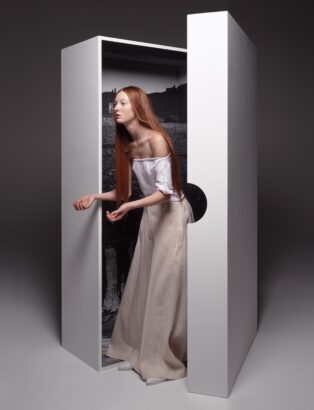
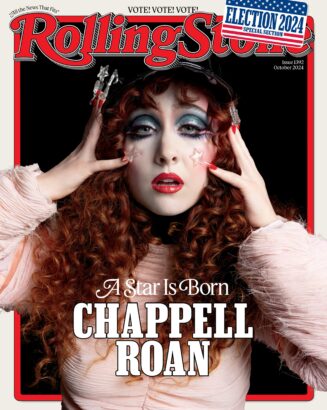
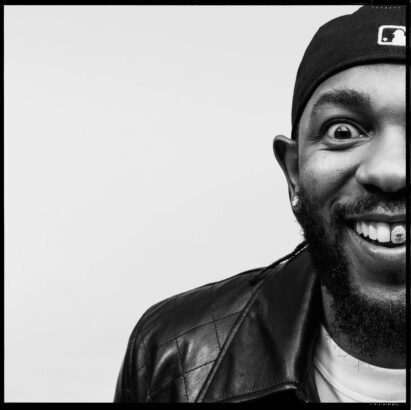
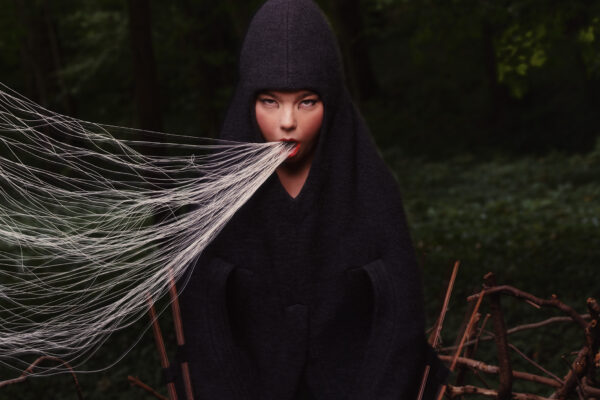
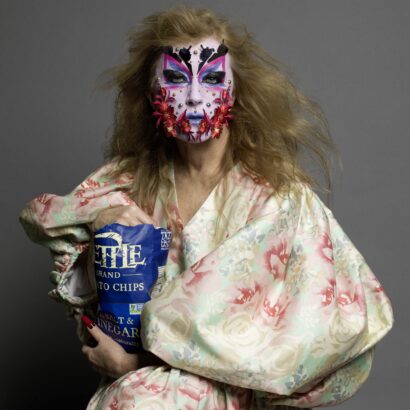
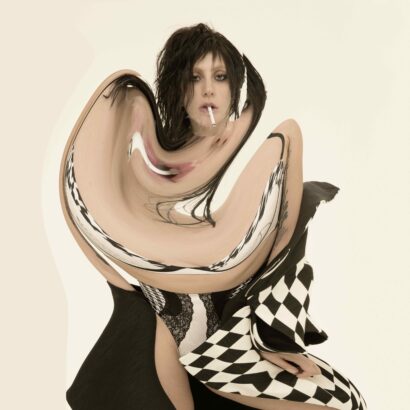
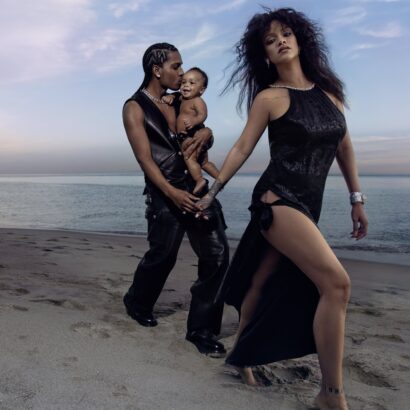
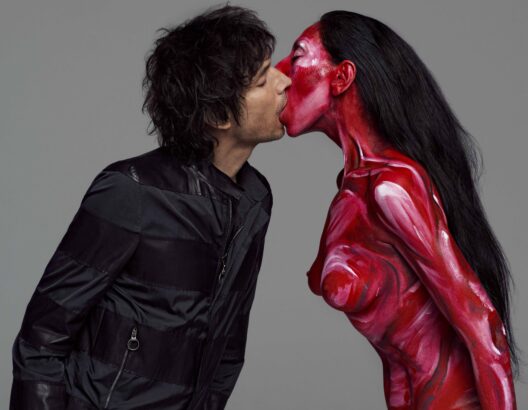
The expansive quality of their work might be traced to its origin in the interplay between two amorous minds and two camera lenses; the pair typically shoot together with Van Lamsweerde engaging and directing their subject through her lens and Matadin capturing from oblique angles. The question of where one ends and the other begins is unfathomable.
The exhibition which unfurls across eighteen rooms reflects the remarkable fluidity of their work which occupies a singular position at the nexus of contemporary photography. The photographers’ agnosticism towards traditional categories such as portraiture, fine art, fashion, or still life is underscored by the exhibition’s curation, which deliberately derides the boundaries between these modes.

Their seminal art experiments of the early 1990s juxtapose against their highly influential fashion advertisements and editorials, in spite of their self-proclaimed status as ‘outsiders’ or precisely because of it. The duo have worked with brands such as Chanel, Balenciaga, Miu Miu and Louis Vuitton and been contributors across many publications – The Face, V Magazine, Vogue, The New York Times and Mission. Their exploration of fashion photography often critiques the genre’s implicit seductive promise that glamour and consumption can offer a route to happiness. The pair have been outspoken in their calls for the fashion industry to resolve its exploitative labour practices and develop a new sustainable model.
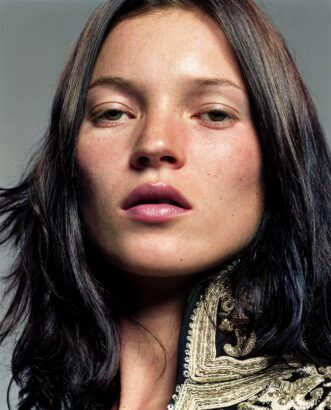
Elsewhere in the exhibition, gorgeously succinct still-lives of pairs and trios of flower stems are reframed as part of their portrait practice when hung across from massive images of Alexander McQueen, Kate Moss and Prince. Van Lamsweerde perceptively jokes about the power exerted by the titles of their photographs: “If I would credit the clothes it would be a fashion picture and if I would say the name of the person on it would be a portrait and it if would have some loose-eyed title it would be a piece of art and so we’re interested in playing with that.”
This playful attitude persists in the couple’s pioneering use of digital manipulation to remould time and reality. The exhibition celebrates the decoupling of photography and linear time by excluding the date from each photograph in the exhibit. Van Lamsweerde and Matadin have sought throughout their career to destabilize the conventional promise of photography of a purveyor of truth.
They were among the first artists to use the quantum paintbox to alter the human form — an early precursor of photoshop previously used in advertisement, for instance, to tweak images of cigarette boxes and car wheels. In doing so, the couple did away with – what Henri Cartier-Bresson termed – ‘the decisive moment’ allowing them to cut through time and alter reality. In an image from 1999 Me Kissing Vinoodh (Passionately) depicts van Lamsweerde bereft of her partner who has been scrubbed out of the image though the trace of his presence lingers on her face.
In another room, a tongue-in-cheek image originally published in The Face, ‘Well Basically Basuco is Coke Mixed with Kerosine…’ young women on bicycles stop to share an ice-lolly on the beach as a rocket launch erupts into the big blue sky behind them.
Amidst a contemporary conversation fixated on scrutinising whether images are ‘real’ or AI-generated, van Lamsweerde and Matadin’s’s oeuvre feels quietly premonitory.
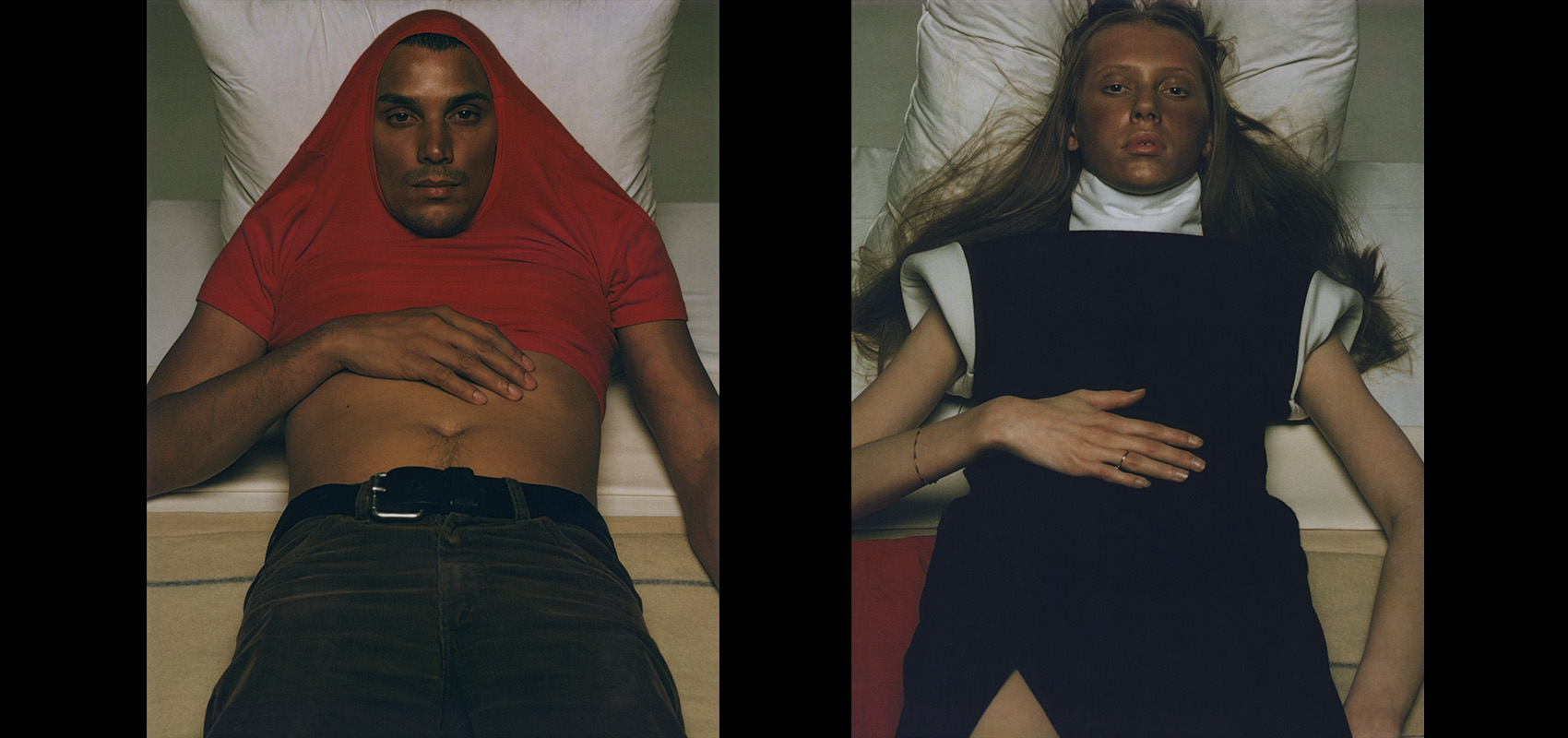
Home page banner, ‘Well Basically Basuco is Coke Mixed with Kerosine… – The Face, 1994’. Homepage thumbnail ‘Alexander McQueen, 2004.’ Inside image left, ‘ME #04, 1998‘, and right, ‘ME #10, 1998.’ All images courtesy of Inez & Vinoodh and M/M (Paris).
The exhibition ‘Can Love Be A Photograph,’ is on view at Kuntsmuseum Den Haag in the Hague until 6th September.