


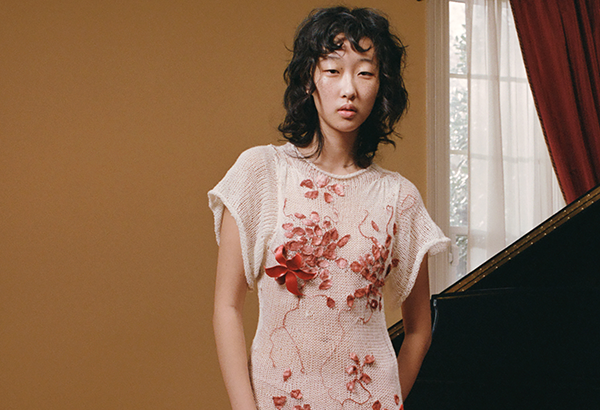
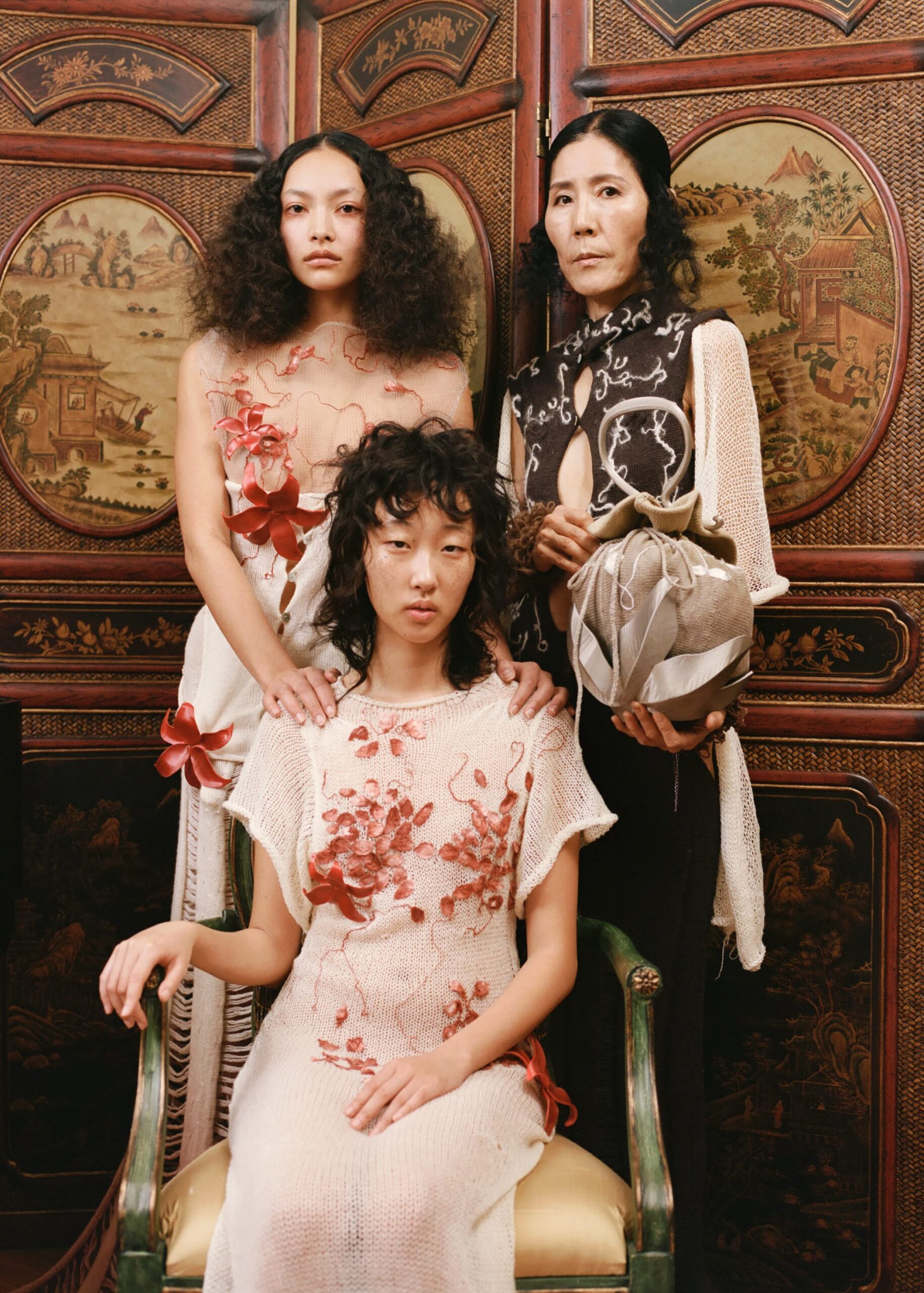
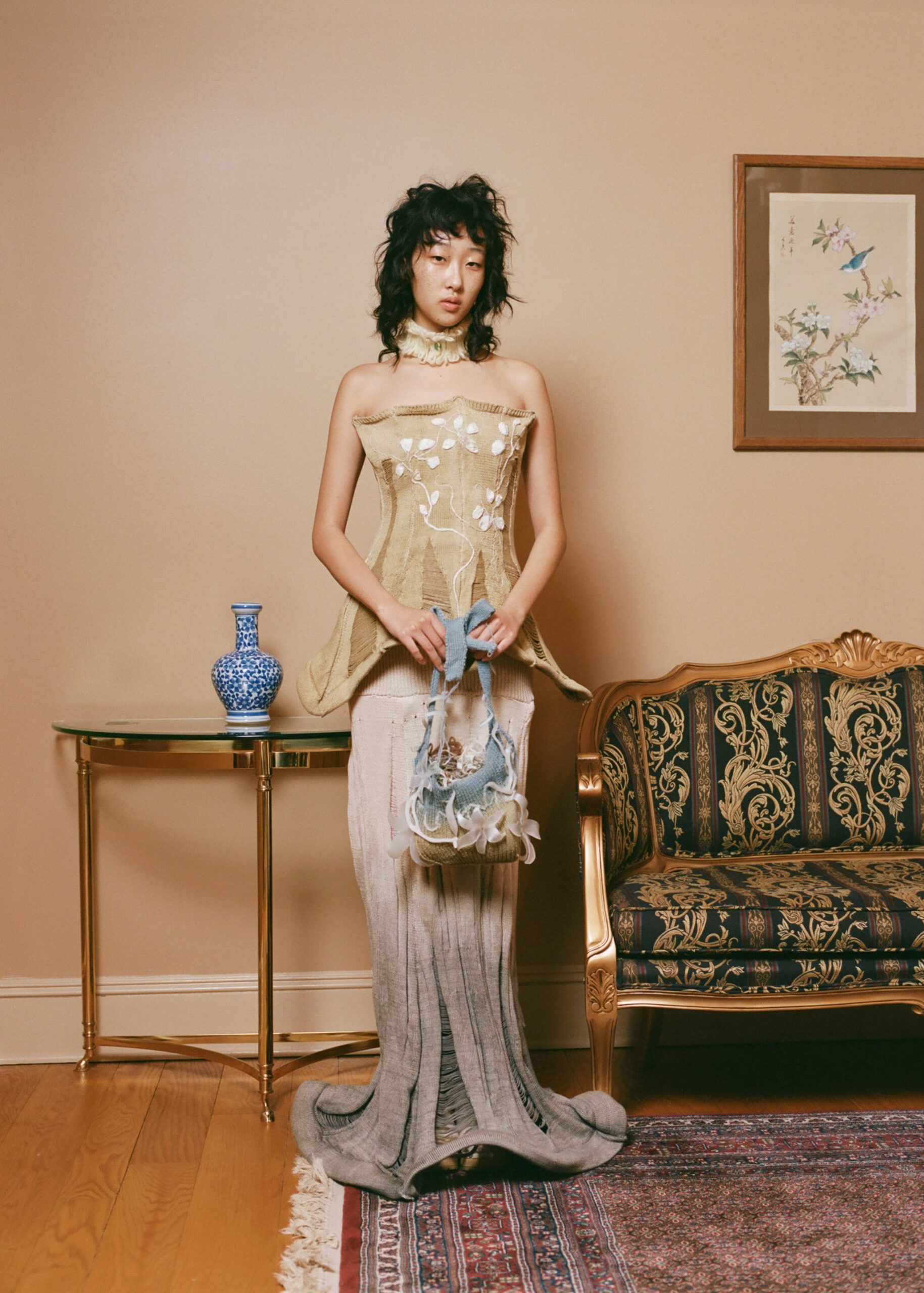
Brooklyn-based designer Grace Gui uses knitwear as a medium for narrative storytelling and innovation.
In a studio in Brooklyn, a bunny named Boots, silkworms, and dedicated artisans come together to create something new. Decades of history, tradition, and memory are all interwoven into a singular piece. A dress. A sweater. A bag. While it may seem fantastical, this tactile experience at Grace Gui remains grounded in the world surrounding.
At Grace Gui, the label prides itself on what designer and founder Grace Wang calls “farm to fashion.” Wang’s label reimagines precisely what fashion can look like when the planet and people are placed at the forefront, never sacrificing sustainability. “When you financially find ways to innovate both in garments and in business, as I’m devoted to social innovation practices, you don’t need to cut corners ever,” says Wang.
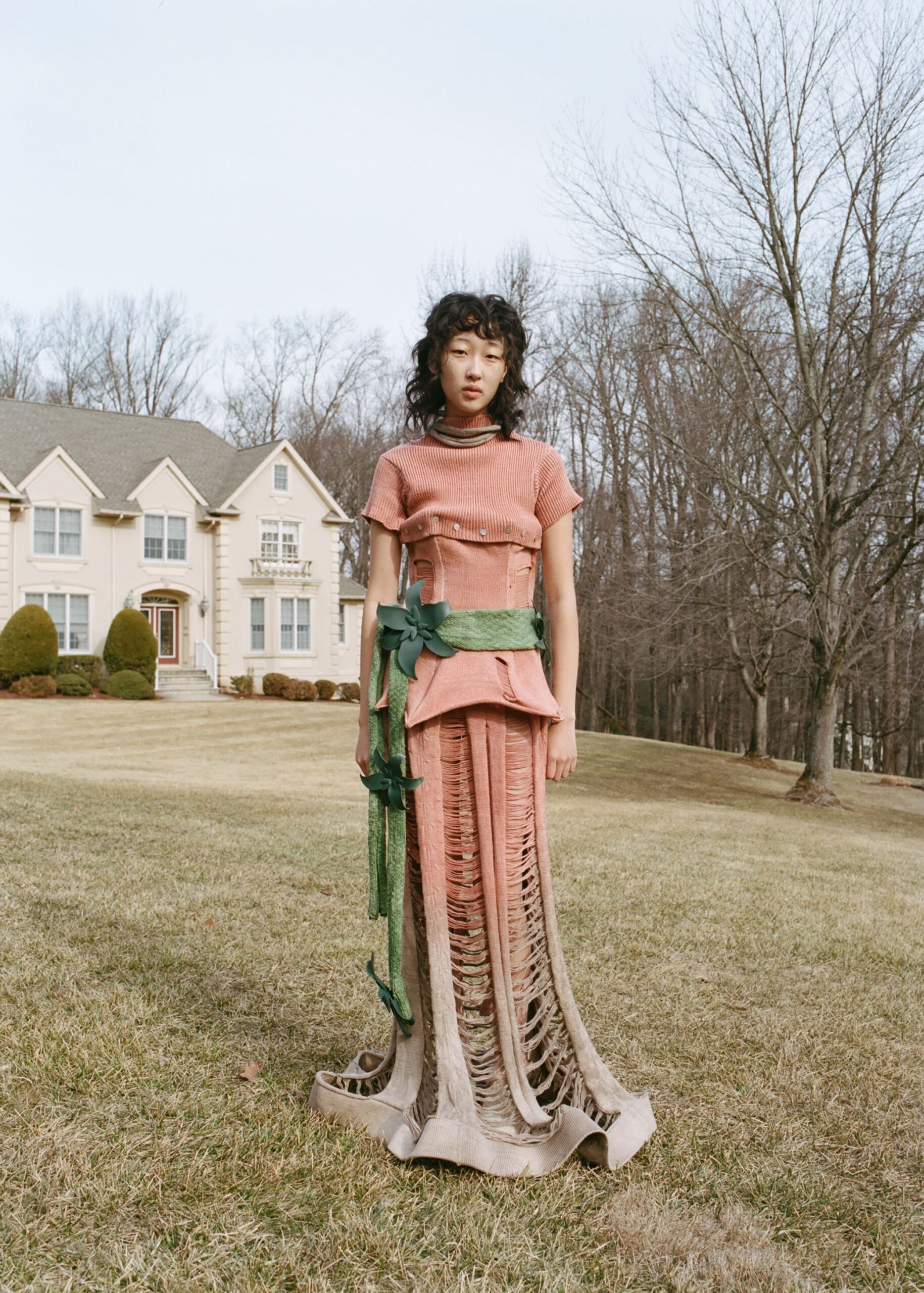
For Wang, Grace Gui, exists at the intersection of her Americana upbringing and Chinese cultural roots as “a first-generation child.” Growing up in the farmlands of New Jersey left a lasting impact on her practice and design inspiration.
Though, in tracing the roots for her inspirations, Wang actually cites leaving New Jersey as a crucial moment for discovery. “Through my first experiences as a conscious adult, I realized that there was a lot more flexibility for cultural fluidity outside of my homogenous community in Jersey,” Wang says.
“I really prioritize flexibility and learning in my everyday life which directly relates to my professional work.“
The summer before attending the Fashion Institute of Technology (FIT) for her undergraduate studies, Wang studied a semester in Scotland. While in Scotland, she was exposed to community and concepts beyond her hometown. Then, after beginning her studies at FIT, Wang experimented with different textiles. This process helped take her back to childhood memories of raising silkworms with her grandmother, grounding her back to her upbringing. “When I started choosing materials that felt familiar with my youth and combined design style lines, motifs, and embellishments associated with the aesthetics of my childhood home, the nicheness of my upbringing translated visually into a new and personal aesthetic.”
This personal aesthetic continues to exist as the crux of Grace Gui,’s design identity where Wang incorporates materials of her farmland upbringing alongside a contemporary take on Chinese and American traditional silhouettes. Yet, Wang does not limit herself to these origins. “As time goes on, I will see or relate to different inspirations and that will influence my work then,” says Wang. “I really prioritize flexibility and learning in my everyday life which directly relates to my professional work.”
Seeking the unorthodox is a driving force for the brand, especially in terms of redefining what knitwear can be. What started out as a hobby soon developed into an integral component of Wang’s work for Grace Gui. “I hated patterns and obsessed over making my own unique garments. I also naturally hate routine,” Wang says. “Knitting just became a perfect vessel for my personality and craft.”
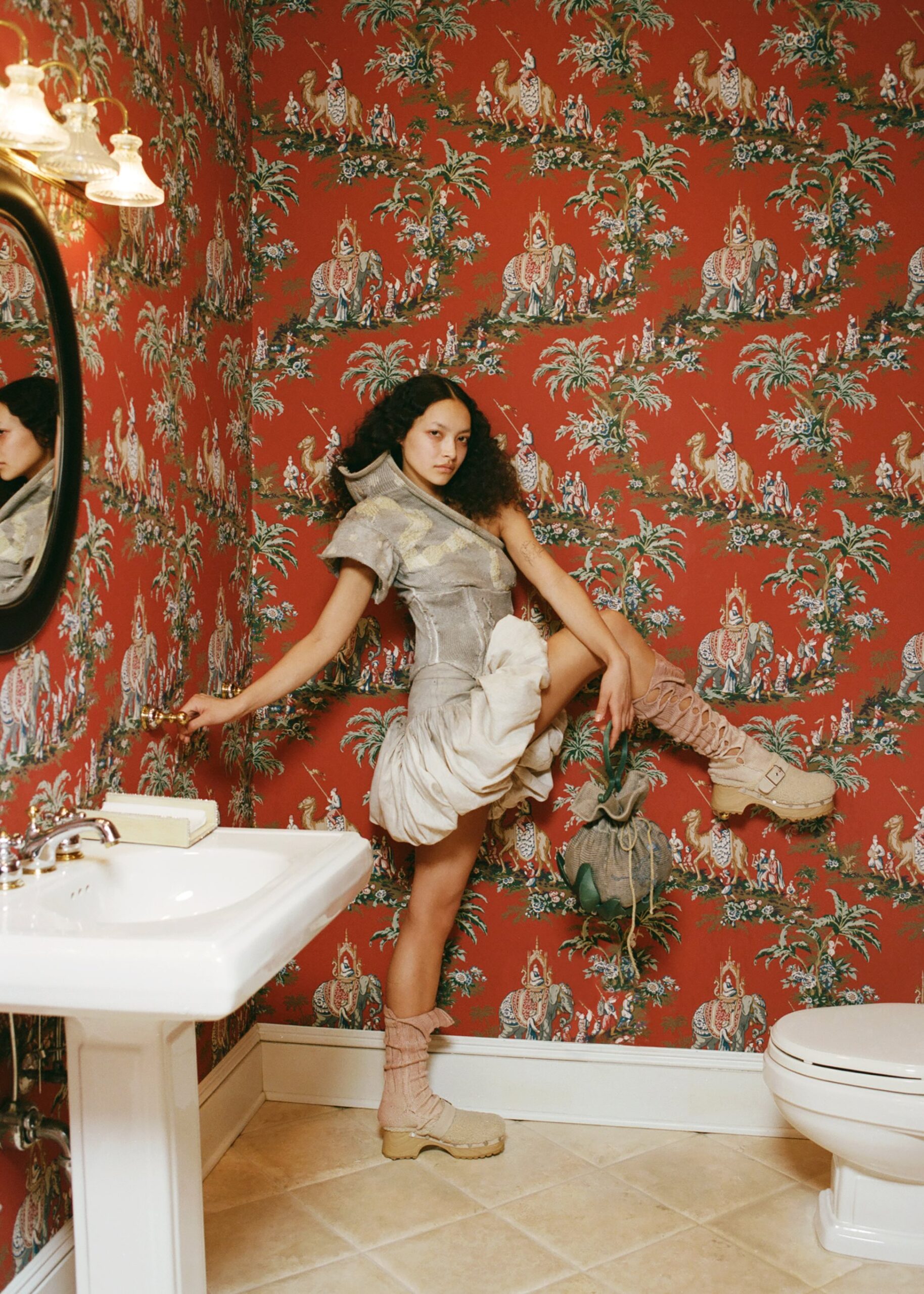

Her rabbit, Boots, is also a unique mascot for her studio work. Wang incorporates some of his fur in looks, though she assures he lives comfortably at her home with plenty of space to roam, explore, and play.
Alongside Boots, Wang also raises her own silkworms in-studio, prioritizing a circular strategy and honoring her memories with her grandmother. When sourcing outside for materials, Wang works with local female farmers to keep business oriented around the Northeast. “We built a system that makes sustainability streamlined and a net-positive impact.”
While material and production choices are integral facets of sustainability, Wang also understands the important connection between customer and product. In sourcing “high quality sustainable materials” and accepting custom orders, Wang aims to build a special relation between customer, clothing, and craft. “You can make something ‘sustainable’ but if the customer does not mentally feel connected to their piece that garment will have a short lifespan. Sustainability is absolutely strung through the entirety of the Grace Gui practice.”
This past August, Wang was the recipient of the inaugural PVH Foundation Runway Ahead Scholarship in collaboration with the CFDA Scholarship Fund, an initiative supporting emerging designers centered on fashion as a medium for narrative and innovation. This news comes after Grace Gui launched a rentable capsule collection this summer with Hauteline. As Grace Gui continues to expand, a dedication to sustainability continues to be etched into every fiber and fabric. “There is no sustainability sacrifice here at all,” says Wang. “My devotion to my craft does not waver.”
All images courtesy of Grace Gui.