


The regenerative, futurist dream we deserve, and how art draws us closer to it, courtesy of Anatola Araba.
One morning you awaken to a watercolor sky and dual suns. Opaque drapery hangs from the ceiling as golden hour shines through the fabric in flints of purples, oranges, and pinks. The glow kisses your face as the sound of chirping birds nearly lulls you back to sleep in your canopy bed made of organic materials. Eventually, your eyes are fully open and you step out of your front door to grab some juicy fruit from the trees lining your street and neighborhood. The fruit is free to all and sumptuous, giving you the nourishment you need to truly start your day.
Throughout the day, there is no rushing or frantic energy. You create and work at a sustainable pace, knowing that the people around you are capable and passionate about holding your needs just as you support theirs. A culture of reciprocity and community care leaves everyone feeling full and ready to give back.
You take a midday stroll and use artificial intelligence to communicate with the animals and plants around you. Everyone and everything is in conversation with one another, which only creates more radical care and mutual empathy. Love is the core value that binds you to everyone around you and is the foundation of this society.
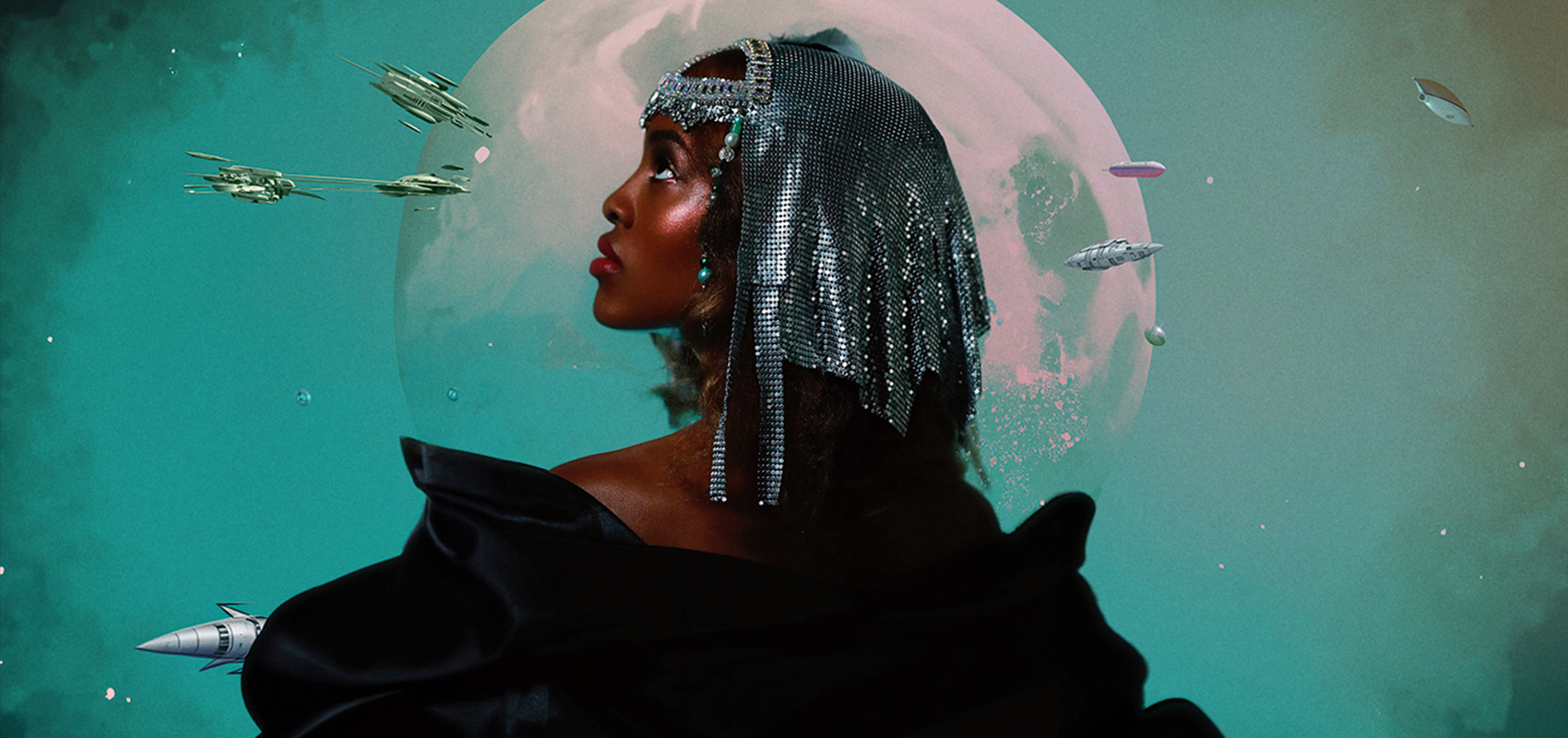
This is the world that the artist and filmmaker Anatola Araba dreams of. Regenerative. Symbiotic. Beautiful. Compelling. Araba, 26, considers herself a collector of people’s visions and dreams—the way others collect Pokémon cards or travel moments. “In one project,” she says, “I asked people what their vision of the world in the future was, and those alternate realities have been so inspiring to bear witness to.” Through her multimedia work, Araba brings elements of these worlds to life.
Araba lives in Los Angeles, where she moved after she graduated from NYU’s Tisch School of the Arts. Her work is very experimental and leans on speculative fiction. As a filmmaker, Araba is a futurist, exploring possibilities that don’t yet exist and bringing them to life in vivid ways. “I’m a champion of imagination, and my grandmother was one of the people who always helped me see and tap into that,” she reminisces. Her grandmother would often tell her, “It’s silly for young people to be bored, because we have this infinite playground in our imagination,” and Araba ran with that fully.
Araba had the great fortune of being surrounded by Black women who fostered her multifaceted nature and helped her lean into her creativity. “My mom has always been a big supporter and example of being and doing what you want to do in the world,” she recalls. Araba’s mother worked for years as an academic, teaching at Harvard before leaving that world behind and creating space for a more nontraditional path in metaphysics and extrasensory perception.
The same dynamics that brought her success in the Ivy League guided Araba’s mother in all her future steps, including how she mothered. Thanks to her, Araba toned up her wild imagination and enjoyed the freedom and encouragement to seek out spaces to cultivate and hone her curiosity. LaGuardia High School, a performing arts school in New York City, and other alternative educational settings gave Araba permission to fully express herself.
That freedom was complemented by a commitment to excellence. “Rigor wasn’t a trade-off for creativity, and learning discipline was also huge,” she declares. From the age of five, she was a competitive gymnast, training long hours and traveling the country. Gymnastics instilled a love for precision and dedication in Araba early on, and that paid off as she transitioned into a fully fledged artist.
The first time Araba heard the term Afrofuturist was when someone used it to compliment her work. “I shot an experimental short film in Paris and the composer for the project said, ‘I love your Afrofuturist work,’” Araba says with a laugh. When she looked up the term later, she saw Afrofuturism as a portal, and she was especially drawn to the hairstyles, fashion, and aesthetics.
“Afrofuturism offered me a way to apply my problem-solving mindset and to design futures where Black people could be liberated, embrace new technologies, and be our full selves,” she says, thinking back to this introduction. “It’s a powerful framework to tell stories about people that are more affirming than the stories otherwise told about us, which highlight hardship and oppression.”
Afrofuturism creates pathways for people to see new possibilities and live in them just long enough to want to make them a reality. Araba had already been putting Black people and innovative technology in conversation through her film projects. Afrofuturism offered a new language—and community—for her.
Afrofuturism comes in many forms. Artists like the painter Jean-Michel Basquiat and the writer Octavia E. Butler notably leaned into the genre’s ability to critique the times and reimagine the future. The latter’s literary work is extremely pertinent for Araba when we speak.
“It’s crazy how Octavia Butler’s words can be so reflective of exactly what’s happening right now,” she notes, “especially with the wildfires in L.A. and inequality on the rise. The gap between science fiction and reality is getting smaller and smaller.”
For some, that’s alarming, but Araba cautions against being consumed by fear: “Fear can rudely take up our time, and we don’t have time for that.” Instead, she advises, we must be bold about taking our future by the reins and making it what we want. She believes a commitment to imagination and reinvention is crucial to remaining hopeful and remembering that we have so much power to design the world around us. Essentially, Araba wants more people to feel the fear and do their work anyway.
Afro Algorithms (2022) is one of Araba’s latest works, and it explores the impact of artificial intelligence (AI)—which has only grown in recent years—through 3D animation and the story of the world’s first AI leader. In the short, the AI leader comes to realize the biases and gaps in its perspective. “Those who invest in and exert power over AI will shape it,” Araba says, “so it’s important for marginalized people to have access to AI and be heard in those spaces and conversations.”
And because the technology is shaped by real people, Araba insists that we need the widest range of voices molding this tool for our collective benefit. There are anxieties around AI and its rapid expansion, which threatens to replace human labor, but those anxieties don’t mean that AI is going away anytime soon. Instead of attempting to avoid the inevitable, Araba wants us to shape AI to our benefit.
That’s why it shows up often in her creative projects, including R3imagine Immersive, a gamified virtual world envisioning what the United Nations’ Sustainable Development Goals would look like in practice, as well as other AI-driven video campaigns and installations created through Araba’s creative studio, R3imagine Story Lab.
Last year, Afro Algorithms was sent into space through an innovative and serendipitous NASA mission. When attending Art Basel art fair a few years ago, Araba met a few team members of Space Blue—a global art, media, and production house focused on technology and space. At the time, Space Blue was organizing an exciting new project to send 222 artworks into space with a NASA moon mission.
“After a very synchronistic conversation and interview selection process, Afro Algorithms was accepted to be one of the art pieces,” Araba exclaims. The actual rocket launch was delayed for over a year—typical for space missions like this, which are extremely costly and require lots of triple-checking to ensure safety and efficacy. When the project did launch, it took approximately eight days in space to reach its destination and land: Afro Algorithms made it to the moon on February 22—2/22. Even more serendipity.
“There’s so much mystery and curiosity about space and its connection to Earth and heavens and cosmos, and how miraculous and mystical it can feel,” Araba reflects. Being part of the project offered a chance for her worldview and musings to take space among the stars and to encourage others to think aloud about their reach.
While the Star Trek franchise proclaims space to be humanity’s final frontier, Araba disagrees: “There are infinite frontiers inside the imagination.” With each gallery installation or film that she creates, she is illuminating these frontiers and putting Black people across the diaspora in the driver’s seat.
As we sign off on our interview the filmmaker says, “See you in the future,” which feels incredibly fitting. We have to see ourselves in the future, as Araba does. And not just any future, but one worthy of aspiring and looking forward to. That is what Araba’s art invokes—the idea that dreaming is the most important precursor to doing.
This feature first appeared in the Women of Today issue. All images courtesy of Anatola Araba.