


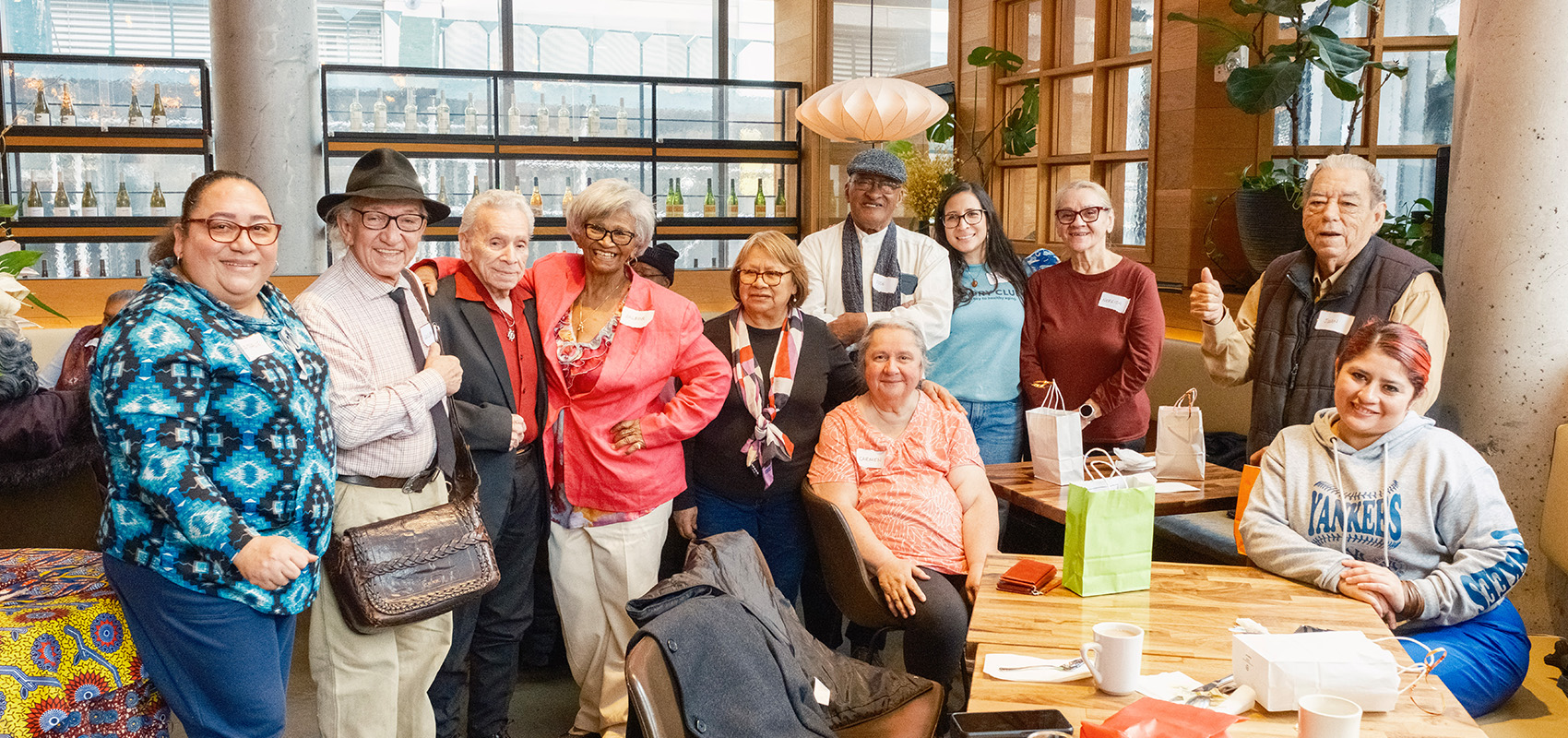
The Life Story Club, a NYC-based club, was founded to prevent loneliness among older adults.
The loneliness epidemic is real—and it’s affecting New York City’s older population. That’s what founder Lily Zhou was seeking to remedy when she developed NYC’s Life Story Club. Life Story Club is the first anti-loneliness club of its kind, offering seniors a place to share the stories they’ve collected over their lives and make new friends in the process.
Lily Zhou started her career off as a data scientist, but she always felt an affinity for spending time with older people. The Brooklyn-based organization was founded in 2019, after Zhou noticed, from working in a Brooklyn nursing home, that the inhabitants of the nursing home had no one to talk to.
In a conversation between Mission Magazine and Zhou, she reminisced on the impetus to develop Life Story Club, saying, “I would visit the nursing home week after week, sitting with small groups of older adults to share their life stories. I would ask questions like, ‘What did you get in trouble for when you were young?’ or ‘What did you discover you’re good at?’ Stories emerged, and with them, a sense of recognition, the feeling that one’s life has mattered, and still does. I found myself drawn into the question of what it means to truly be seen and heard as we age.”
This need to share stories is felt by older adults. Michael, a storytelling member, says, “Something that was inside, like comes out…That was in me all this time and now it’s outta me, and you look forward to the Life Story. Life Story is beautiful. You wanna tell me about your life? Do you need someone to listen? Join the Life Story.”
The main problem that Zhou noticed—and that Life Story Club now addresses—is that human beings are wired for connection, but in an individualistic space like NYC, isolated in a nursing home, real connections may be hard to form. As she listened to stories that the older adults told her, she developed the idea for Life Story Club, and seven years later, it’s still running.
Life Story Club seeks to connect older adults with people they can talk to and relate to. Rafael says, “When I started to lose my sight, it was traumatic emotionally and that is the blessing of the group—that we are all welcome, no matter the physical or emotional condition they are in.”
Ana, another Life Story Club member who’s lost her sight has been able to connect with Gloria and Rafael. Stephanie, the Spanish-language facilitator says, “Ana joined our Spanish-speaking Citymeals group not too long ago. In one session, she opened up about losing her vision and how hard it was to leave behind the community she’d been a part of—a support group for blind older adults in Manhattan….As she shared, something remarkable happened. Two other group members, Gloria and Rafael, revealed their own experiences with blindness.” New bonds that would never have happened otherwise were created through Life Story Club.
This club, based on the foundation of connection, works with a trusted network of partners in NYC which keep the program going. These partnerships are with service-based organizations that believe in community and connection above all.
While Life Story is meant for NYC-based individuals, primarily running workshops over Zoom or on the phone, with some occasional in-person meet-ups, there has recently been a demand to expand outside of NYC. To this point, Zhou has noted that the team at Life Story Club has been seeking to establish partnerships across multiple states in the United States of America.
“Across international, national, and local systems, there is increasing momentum to prioritize social connection as a core component to healthy individuals and strong communities. Ensuring that our societies can age with dignity is no longer a niche concern, and is becoming a central policy priority, and one that we have an opportunity to shape together.”
Getting involved in a club like this is not hard to do—Zhou welcomes anyone working in a service-based organization to reach out to partner with Life Story Club. These partnerships keep the club funded, so they can host local outings where older adults can meet their new virtually-made friends.
One storytelling member, Alva, at age 76, says, “It was nice to see people that you think of as your storytelling family. To connect them to the stories you heard from them.”
The club also trains local facilitators for the NYC-based events. Being a facilitator has great effects on those trainees, building a society where no one’s value has an expiration date.
The anti-loneliness club, Life Story Club, has done amazing things for the older adults of New York. Carmen, a storytelling member, says, “We elderly people need to have company…It was like the answer to a prayer because when you are alone, in prayer you ask for someone to come and talk to you.”