



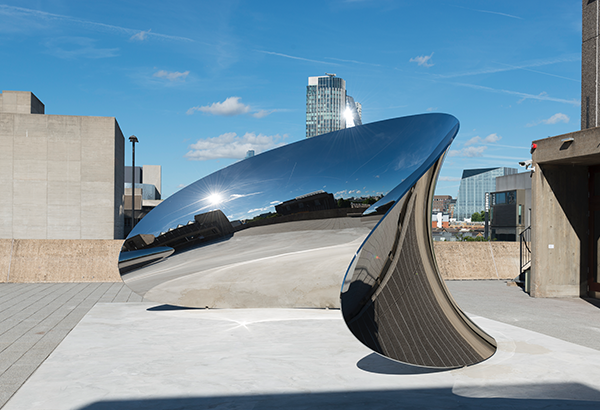
Anish Kapoor makes a triumphant return to the Hayward Gallery, with an excess of blood, gore and portals to help celebrate 75 years of the Southbank Centre.
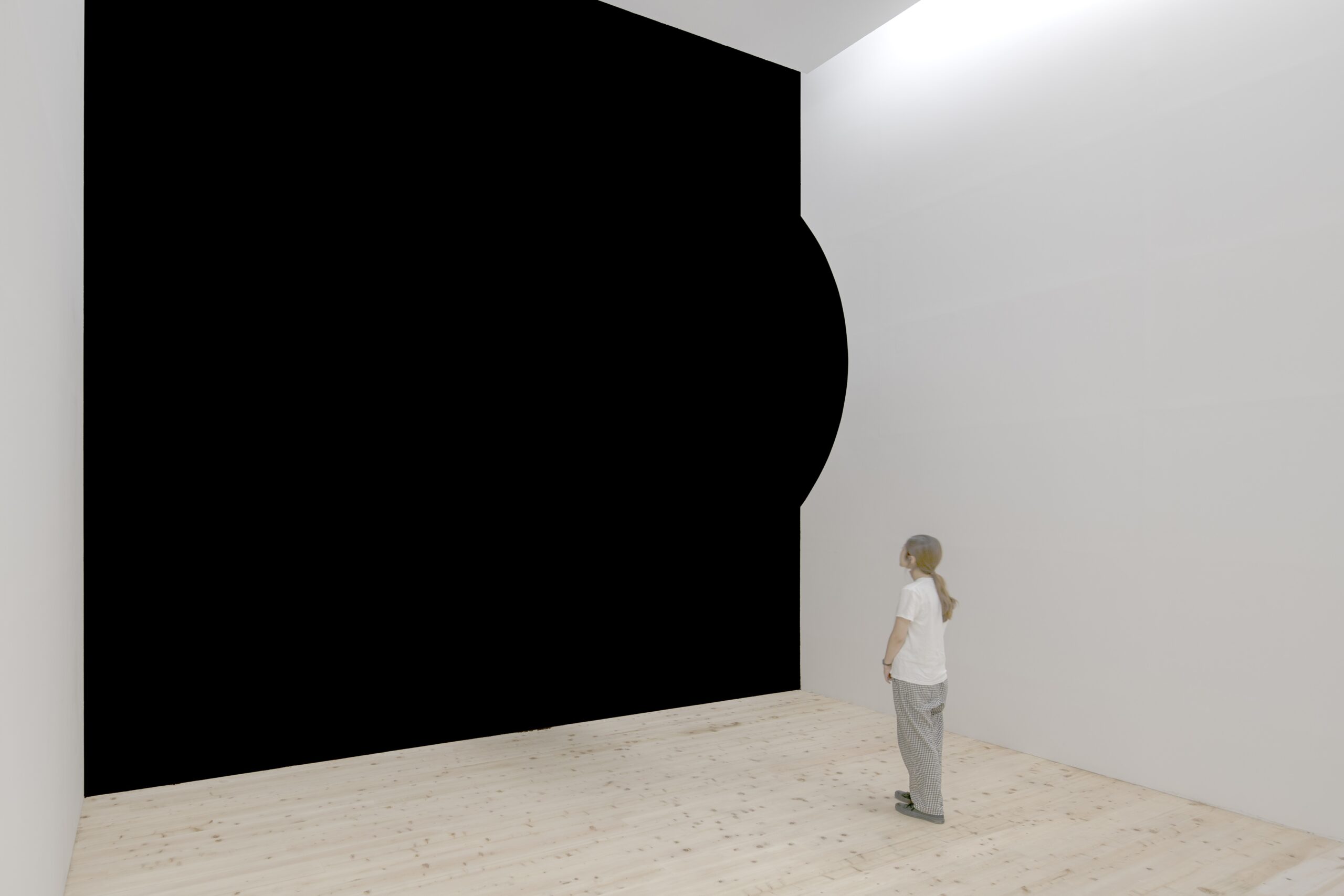
‘Be careful not to touch any of the artwork,’ the lady says as you walk through the door. ‘One of the pieces will stain your clothes.’ It’s not the normal caution when entering an exhibition, and in the first room of Anish Kapoor’s new retrospective at the Hayward Gallery, it feels more likely that the artwork will come and touch you. Through his trademark vantablack, Kapoor sucks you into his work, pulling you towards various voids that appear to stretch far deeper than the surface of the gallery’s walls.
If there are higher powers at play in this exhibition, Kapoor is one of them. He bends the Hayward Gallery to his will, as much as he alludes to human frailty elsewhere. A giant red plastic spherical structure, titled All of Nothing, greets you on arrival. Visitors duck and weave around it, cautious to avoid each other and the artwork in the limited space left. The room, normally so open, can barely contain the shape, and as you rise through the gallery, the red sphere continues to follow you, bulging through walls upstairs, leaving you unsure if it’s the same crimson monolith you encountered downstairs or if Kapoor has built new ones just to confuse you.
In room number two, the steward’s advice suddenly makes more sense. Descending from above is an inverted, bloodied mountain. Titled Mount Moriah at the Gate of the Ghetto, it is slathered in red and black paint, save for the occasional white streak, the paint almost dripping down the minuscule mountain like candle wax. It is biblical. Atop Mount Moriah in Jerusalem, God supposedly commanded Abraham to sacrifice his son, Isaac, and it was only after Abraham obeyed that God intervened and saved the boy from sacrifice.
There’s nobody coming to save you here. Indeed, the suffering is only getting started. Down the other side of the room stand three more artworks, part-painting, part-sculpture. Titled Plastic Sacrifice I, II, III, they vaguely resemble internal organs, dark with the red of deoxidized blood, parts of the body that should, ideally, never see the light of day. Vacuum-wrapped in a thin layer of plastic, the light reflects off the dark pockets, simultaneously making you step back and want to touch them.
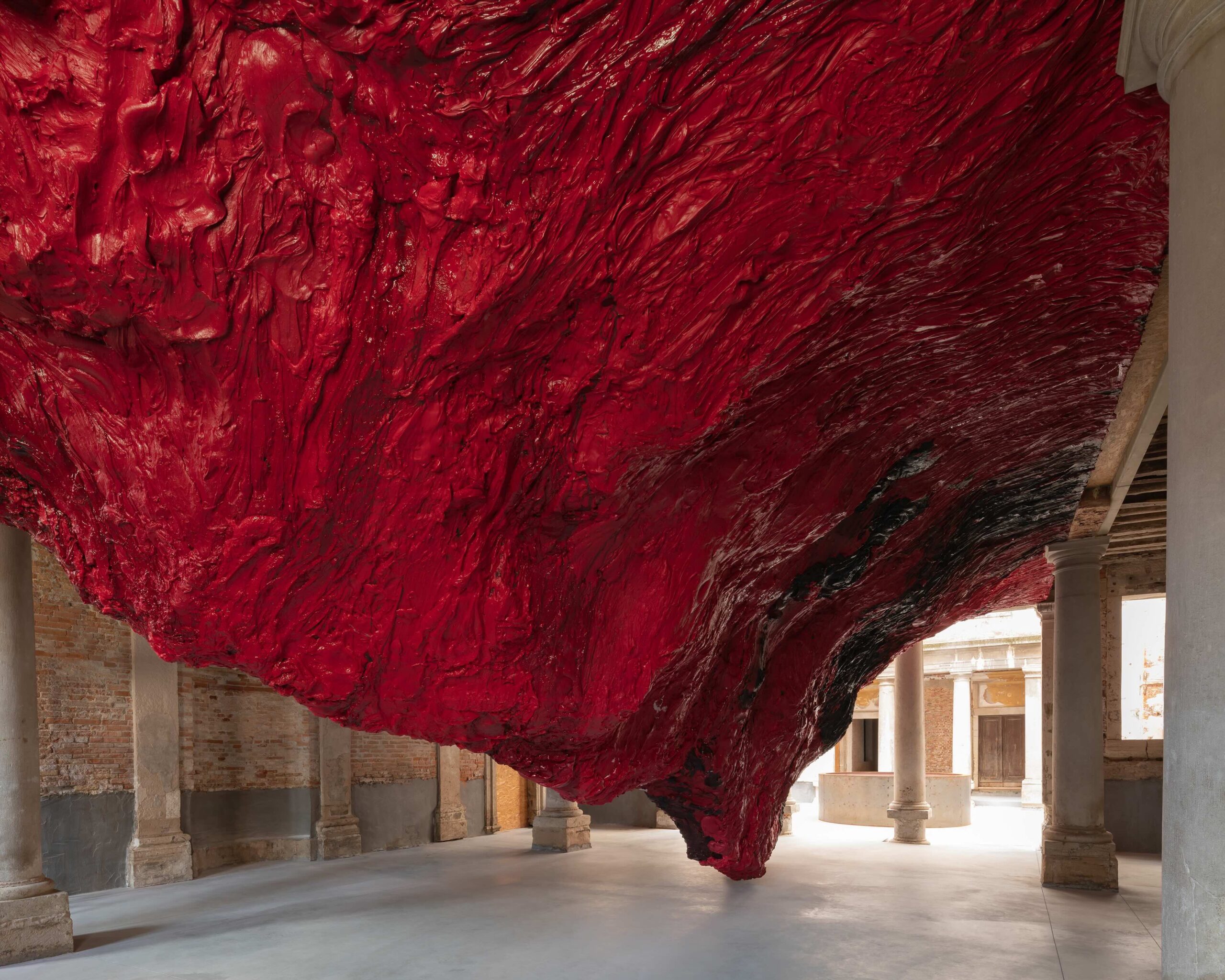
Upstairs, the dark portals of vantablack and the red of Mount Moriah come together in a sprawling sculpture that takes up a whole room. Called Ha Makom, a Hebrew term translating as “The Place”, the sculpture resembles jagged rocks and rises steadily towards a dark door at the peak. The void invites questions. What’s beyond? Where does it lead? Well, for now at least, more blood and ambiguity.
The bloodbath comes to a head in the fifth room. Across two structures, Kapoor spills guts. In metal trays tower piles of limbs and bodily fluids. In parts, these structures come closest to the human form as any of Kapoor’s work can be, invoking both birth and death and the similarities between the two; in other parts, the works are alien, and it seems you’re looking at an octopus or a squid or some tentacled creature that was happily residing in the darkness of the ocean depths, only to be summoned to the light and promptly butchered.
On the walls are more paintings, a group collectively Ritual Expiation. Gold and red, they again allude to portals, and at times certain orifices, but are generally more hopeful than the slaughter that surrounds you.
Outside, on each of the Hayward Gallery’s two balconies, are the reflective sculptures for which Kapoor has perhaps become best known. Cloud Gate in Chicago remains his most famous work, and one of the outdoor sculptures brought to the Southbank Centre this summer is quite similar, bending like a giant crisp. The other is sturdier, with hard lines like mirrors. Coupled with the London skyline and the fresh air of early summer, they’re a welcome break in an exhibition otherwise filled with glorious mess.
Homepage banner image installation view of Anish Kapoor, 2026. Homepage story image, Installation view of Anish Kapoor, Tsunami (2025). Inside image installation view of Anish Kapoor, All of Nothing (2026). All Photos unless otherwise stated, by Dave Morgan, courtesy of the Hayward Gallery and the artist. © Anish Kapoor. All rights reserved, DACS, 2026. The exhibition runs through till 18th October 2026.