


Omoyemi Akerele does not think that African fashion gets the respect it deserves on the global stage—but it’s a slight that no longer bothers her. As the founder of Lagos Fashion Week(LFW), Akerele has other priorities. “If we keep looking at ourselves through [a global] gaze, we’re never going to achieve what we want,” she says. “It’s important that we build internally rather than wait for recognition. On the international stage, African fashion is often underrepresented and misunderstood, but, you know, that’s their loss.”
She’s right too. Since LFW started in 2011 as an annual showcase of Nigerian designers for an international audience of buyers, stylists, and journalists, it has developed in a way that’s more sustainable and collaborative than many other fashion events, and its focus on heritage crafts is inspirational. This achievement was recognized in November 2025 when Akerele was awarded the prestigious Earthshot Prize, an acknowledgment of the positive business model that LFW offers in terms of circular and sustainable initiatives.
“Yeah, the Earthshot was a real honor, and we didn’t see it coming,” Akerele, 48, says. “I mean, there’s no way Lagos industry scores 100% on sustainability. But if you’re encouraging designers and communities to work with local artisans or to grow their own materials, that helps. If you promote small-batch production, recycling waste, and community collaboration, then that leads to sustainable, circular production. Many African designers are not only talented and creative, they are also often rooted in sustainability by necessity. I see part of our role is to encourage that.”
Fashion was not Akerele’s first career choice, and maybe that gives her a unique perspective of the industry. She grew up in Lagos with six siblings, studied at university in the city and then Warwick in the U.K., and she worked as a lawyer until 2004. She then switched to styling and editing—an unusual move, but one she says her family fully supported. Akerele launched Style House Files, a fashion-business development agency, in 2008, and this company is the powerhouse behind LFW.
“There is a certain status that comes with being a lawyer, a certain comfort, and I had to let go of that,” she says. “But I was driven by purpose, and I still find it inspiring today to be part of a group that’s building a new ecosystem for the Nigerian fashion industry.” She decided that a schedule of catwalk shows would suit the “vibrant, entrepreneurial” fashion scene in Lagos—“There’s something electrifying about a great catwalk show.”
In the early years, designers shared resources such as the venue, makeup artists, stylists, and models, which promoted community spirit. “We always say that communities are the starting point of the designers’ creative process,” Akerele says. Currently, LFW is based in tents in the grounds of the Federal Palace Hotel in Lagos’s Victoria Island district, a tropical modernist property built in 1960 to mark Nigeria’s independence.
Fashion week’s collegiate vibe means that not only did names such as Adebayo Oke-Lawal, the designer who founded Orange Culture, and Kenneth Ize get their first breaks at LFW but they have also continued to support the initiative as their international reputations have grown. LFW is now one of the most prominent fashion events in the region, and labels from other African nations also choose to show there. At the most recent LFW, in October 2025, there were more than 60 African designers on the schedule, including Lisa Folawiyo—a favorite of the actors Lupita Nyong’o and Lucy Liu—and Iamisigo, a label by the designer Bubu Ogisi, which has created pieces for Julia Fox and Naomi Campbell.
“Lagos Fashion Week has been inspired by the skills that have been passed down from generation to generation and how that translates not just into the work of designers but also into a shared heritage across the African continent.”
Akerele thinks one of the main factors behind the success of LFW is that it has become one of the best showcases of national heritage and craftsmanship in the region. Many African countries have a complex relationship with imported clothing—especially the secondhand-garment industry and unwanted, unwearable clothes sent from Western countries. This business has overwhelmed a number of sub-Saharan countries. As well as creating toxic landfill and polluting waterways, the abundance of cheap clothes has had a negative impact on the African textile and fashion industries.
“Lagos Fashion Week has been inspired by the skills that have been passed down from generation to generation and how that translates not just into the work of designers but also into a shared heritage across the African continent,” Akerele says. “Focusing on this contributes to the preservation of skills but also translates into the designs you see on the catwalk today.”
As well as promoting local craft, LFW platforms two initiatives that are specifically focused on sustainability. Green Access is an annual accelerator program that provides training and support for five African designers who specialize in upcycling and material innovation. It was started in 2018, and previous cohorts have included Cute-Saint, designed by Muftau Femi Ajoses and featuring tailoring and signature cowrie-shell details, and Ebuka Omaliko’s handcrafted accessories and footwear label Maliko Studio.
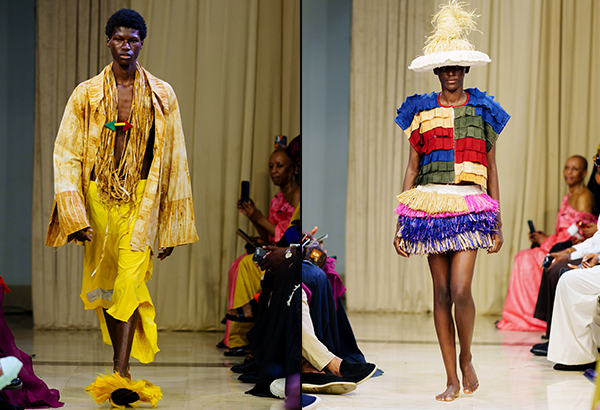
The other initiative is Woven Threads, a four-day event that takes place each April and focuses on the African textile industry. The 2026 showcase, its seventh, was curated by the Kenyan consultant Sunny Dolat and featured brands including Éki Kéré—a company founded by Abasiekeme Ukanireh that makes clothes from raffia—and Hertunba, which upcycles vintage aso oke and akwete wrappers (traditional textiles worn for special occasions and celebrations).
“This is ancestral knowledge, and it’s very important to make sure that these crafts are a renewable resource that is nurtured.”
“I’m really proud of Woven Threads,” Akerele says. “It takes eyes off the catwalk and back onto the garments themselves, back to the technique and to where materials are sourced. I really love the storytelling in this initiative, it helps us communicate the essence of what African fashion means to a wider audience.”
Textiles such as aso oke—a handwoven fabric created by the Yoruba people—and Ankara-patterned material are currently popular with international fashion designers. African-influenced dress is also now a common sight at red carpet events thanks to celebrities such as Michael B. Jordan, Wunmi Mosaku, and Burna Boy. As Akerele says, “I think the audience for African fashion is not just within the continent but also within communities of Africans and the diaspora.” But this interest means it’s increasingly important to make sure that consumers know where these beautiful fabrics and intricate styles come from. Initiatives like Woven Threads can help do this.
“This is ancestral knowledge, and it’s very important to make sure that these crafts are a renewable resource that is nurtured. It’s important that we create pathways for visibility, for collaboration, and for market access,” Akerele says.
Though conservation and creativity are her priority, Akerele also has some very practical aspirations for the Nigerian fashion industry. Her next big project? To create work hubs that will promote collaboration and reduce waste. The idea is that young designers will share workshops, tailors, and craftspeople to keep costs down and share dyeing and production facilities to reduce material waste and pollution. “Then young designers can focus on the business of being creative. They’ll have these centralized co-working spaces that can fully support them, that could also be spaces for pop-ups. It would be great to get these up and running in other African countries too.”
It’s an ambitious project, but if anyone can manage it, Akerele can. Her dedication and knack for spotting what gives Nigerian fashion its creative edge are hard to beat. She says: “If you’d given me a crystal ball back when we started out with Lagos Fashion Week, I don’t think I would have predicted where we are today. It was uncertain, and we’ve had to build every step of the way. But bringing something into existence like this is so inspiring. I still love that today—being part of a group that’s building a fashion ecosystem and seeing it thrive.”
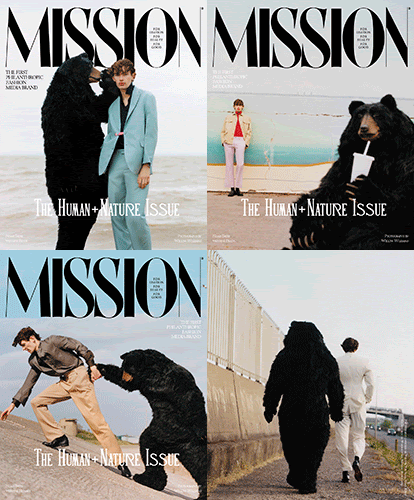
Homepage image by Y’wande from Lagos Fashion Week’s Woven Threads initiative. Homepage thumbnail image left, designs by Ghanaian brand Wote K.I. and right, éki Kéré’s Woven Threads presentation. Photos courtesy of Lagos Fashion Week All photos courtesy of Lagos Fashion Week. This story first appeared in Issue 14 The Nature + Human Issue, guest edited by David De Rothschild. Get your digital copy here.